


Introduction
The on-demand economy has transformed the way people access everyday services. Whether it’s booking a taxi, ordering food, scheduling a home service, purchasing groceries, consulting a doctor, or hiring a beauty professional, customers now expect everything to be available instantly through a mobile application. This growing demand for convenience has encouraged businesses across multiple industries to adopt digital solutions that simplify service delivery while improving customer experiences.
In 2026, the on-demand app market continues to expand as smartphone adoption, digital payments, artificial intelligence (AI), and hyperlocal delivery services become increasingly common. Consumers expect faster response times, personalised recommendations, secure payment options, and real-time tracking, making feature-rich mobile applications an essential part of modern businesses.
For entrepreneurs and startups, developing an application completely from scratch can require significant time, investment, and technical expertise. As a result, many businesses are choosing on-demand app clones—ready-made, white-label solutions inspired by successful platforms. These applications provide a proven business model while allowing complete customization to match a company’s branding, services, and operational requirements.
Whether you’re planning to launch a ride-hailing platform, food delivery marketplace, grocery delivery service, healthcare application, or multi-service super app, choosing the right clone solution can significantly reduce development time and help you enter the market faster.
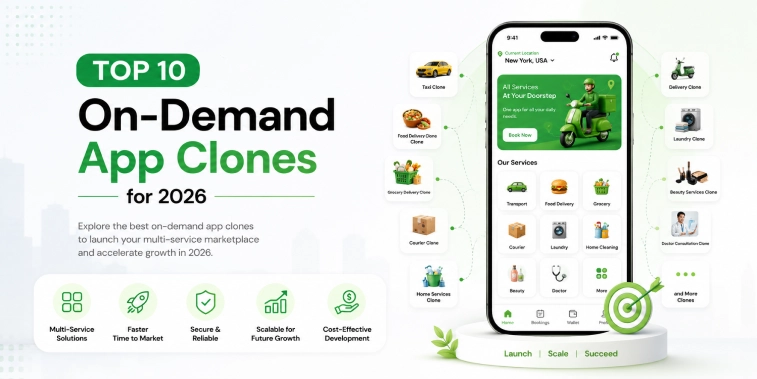
In this blog, we’ll explore what on-demand app clones are, why they’re becoming increasingly popular in 2026, the top 10 on-demand app clones for different industries, essential features every modern clone app should include, future market trends, and why businesses prefer white-label solutions over building applications from scratch.
What Is an On-Demand App Clone?
An on-demand app clone is a ready-made software solution designed to replicate the core functionality and business model of a successful application while allowing businesses to customize it according to their own brand and operational requirements.
Unlike copying an existing application, a clone app serves as a customisable foundation. Businesses can modify the design, branding, features, payment methods, languages, currencies, and service categories to create a unique platform tailored to their target audience.
Most modern clone applications include separate panels for the following:
- Customers
- Service providers or delivery partners
- Merchants (where applicable)
- Business administrators
This structure enables businesses to efficiently manage bookings, payments, customer interactions, analytics, and day-to-day operations from a centralised dashboard.
One of the biggest advantages of a white-label clone app is its flexibility. Instead of spending months building an application from the ground up, businesses can launch a fully functional platform much faster while reducing development costs and minimising technical risks.
Today, clone app solutions are available across various industries, including transportation, food delivery, grocery delivery, healthcare, beauty and wellness, home services, courier delivery, vacation rentals, and multi-service marketplaces.
Why Are On-Demand App Clones Growing in 2026?
The popularity of on-demand applications continues to rise because they provide faster, more convenient, and highly personalised digital experiences. As customer expectations evolve, businesses are investing in technology that helps them deliver services more efficiently while remaining competitive in rapidly changing markets.
Several key factors are driving the growth of on-demand app clones in 2026.
Rising Customer Expectations
Modern consumers expect instant access to products and services. Whether booking transportation, ordering groceries, scheduling home services, or consulting healthcare professionals, customers prefer applications that offer fast booking, secure payments, and real-time tracking.
Growth of Artificial Intelligence
Artificial intelligence is making on-demand applications smarter and more efficient.
Businesses now use AI for:
- Personalized recommendations
- Smart search
- Automated customer support
- Intelligent booking management
- Route optimization
- Demand forecasting
These capabilities improve customer satisfaction while reducing operational costs.
Faster Business Launch
Launching an application from scratch often requires months of planning, development, testing, and deployment.
Clone app solutions allow businesses to enter the market much faster by providing a proven technology framework that can be customized according to business requirements.
Digital Payments and Smartphone Adoption
The continued growth of smartphones and secure digital payment systems has accelerated the adoption of on-demand applications worldwide. Customers increasingly prefer mobile-first experiences that allow them to book services, make payments, and track requests anytime and from anywhere.
As digital transformation continues across industries, on-demand app clones provide businesses with a practical, scalable, and cost-effective way to launch innovative platforms while meeting the growing expectations of modern consumers.
Top 10 On-Demand App Clones for 2026
The on-demand economy has expanded far beyond food delivery and ride-hailing. Today, businesses across industries are adopting clone app solutions to launch scalable digital platforms quickly while reducing development time and costs. Choosing the right clone app depends on your business goals, target audience, and the services you plan to offer.
Below are ten of the most popular on-demand app clones that entrepreneurs should consider in 2026.
1. Gojek Clone App
A Gojek Clone App is a multi-service platform that combines several on-demand services into a single application. Instead of using different apps for transportation, food delivery, grocery shopping, courier services, home services, and pharmacy delivery, customers can access everything from one place.
Common services include:
- Ride-hailing
- Food delivery
- Grocery delivery
- Pharmacy delivery
- Courier services
- Home services
- Wallet integration
A Gojek clone app is ideal for entrepreneurs who want to build a super app capable of serving multiple customer needs while generating revenue from various service categories.
2. Uber Clone App
An Uber clone app is designed for taxi booking and ride-hailing businesses. It enables customers to book rides instantly, track drivers in real time, and make secure online payments.
Popular features include the following:
- Instant ride booking
- Live GPS tracking
- Fare estimation
- Multiple payment methods
- Driver ratings
- Ride history
Businesses can also expand the platform by introducing bike taxis, rental rides, intercity travel, and corporate transportation services.
3. Postmates Clone App
A Postmates clone app supports multiple delivery services through one platform. Businesses can offer food delivery alongside grocery, pharmacy, retail, and parcel delivery services.
Key capabilities include:
- Multi-store marketplace
- Real-time order tracking
- Delivery partner management
- Merchant dashboard
- Secure payments
- AI-powered route optimization
Its flexibility makes it suitable for startups and established businesses looking to build a comprehensive delivery platform.
4. DoorDash Clone App
A DoorDash clone app focuses primarily on restaurant and food delivery services. Restaurants can receive online orders while customers browse menus, schedule deliveries, and track their orders from preparation to delivery.
Essential features include the following:
- Restaurant listings
- Menu management
- Order scheduling
- GPS tracking
- Contactless delivery
- Customer reviews
The platform is an excellent choice for businesses entering the online food delivery market.
5. Instacart Clone App
An Instacart clone app allows businesses to launch an online grocery delivery platform that connects customers with supermarkets, local grocery stores, and convenience stores.
Core features include:
- Grocery catalog management
- Smart product search
- Order scheduling
- Inventory management
- Digital payments
- Delivery tracking
With growing demand for same-day grocery delivery, this clone app offers significant business potential.
6. Airbnb Clone App
An Airbnb clone app enables entrepreneurs to build an online vacation rental marketplace where property owners can list accommodations and travellers can book short-term stays.
Typical features include the following:
- Property listings
- Booking calendar
- Secure payments
- Guest reviews
- Host dashboard
- Reservation management
This solution is ideal for businesses targeting the travel and hospitality industry.
7. TaskRabbit Clone App
A TaskRabbit clone app connects customers with professionals offering home and personal services.
Businesses can support services such as:
- Furniture assembly
- Home cleaning
- Electrical repairs
- Plumbing
- Painting
- Moving assistance
- Handyman services
The platform simplifies service booking while helping professionals connect with local customers.
8. Blys Clone App
A Blys clone app is designed for beauty and wellness businesses that provide on-demand services at customers’ preferred locations.
Services may include:
- Hairstyling
- Makeup
- Massage therapy
- Facial treatments
- Nail care
- Spa services
- Wellness consultations
With increasing demand for at-home beauty services, this clone app presents strong growth opportunities.
9. Practo Clone App
A Practo clone app supports healthcare providers by offering online doctor appointments and telemedicine services.
Key features include:
- Doctor profiles
- Appointment scheduling
- Video consultations
- Digital prescriptions
- Medical record management
- Online payments
It is well suited for hospitals, clinics, and healthcare startups embracing digital healthcare solutions.
10. Urban Company Clone App
An urban company clone app allows businesses to build a marketplace for professional home services.
Popular service categories include:
- Home cleaning
- Appliance repair
- Electrician services
- Plumbing
- Pest control
- Painting
- Beauty services
The platform connects skilled professionals with customers while simplifying booking, payments, and service management.
Each of these clone apps addresses a specific market need, allowing entrepreneurs to launch scalable businesses with proven business models. The right choice depends on your target audience, industry, and long-term business objectives.
Must-Have Features of Modern On-Demand App Clones
Regardless of the industry, a successful on-demand application should deliver a seamless experience for customers, service providers, and business owners. Modern clone apps are designed to simplify operations, improve user engagement, and support long-term business growth. By integrating the right features, businesses can increase customer satisfaction, streamline daily operations, and remain competitive in today’s digital marketplace.
Customer Features
The customer application is the primary touchpoint of any on-demand platform. It should be intuitive, fast, and easy to navigate while providing a convenient booking experience.
Essential customer features include:
- Simple registration and login
- Advanced search and smart filters
- Real-time GPS tracking
- Multiple payment options
- Booking history
- Push notifications
- Ratings and reviews
- Favorite services or providers
- Order scheduling
- In-app customer support
These features allow customers to discover services quickly, complete bookings securely, and stay informed throughout the entire process.
Service Provider Features
Whether the platform serves drivers, delivery partners, healthcare professionals, beauty experts, or home service providers, they need dedicated tools to manage their work efficiently.
Important service provider features include:
- Profile management
- Availability scheduling
- Booking management
- Navigation support
- Earnings dashboard
- Performance reports
- Customer communication
- Service history
- Push notifications
- Secure payout management
These capabilities help service providers organise their schedules, improve productivity, and deliver a better customer experience.
Admin Features
The admin panel serves as the control centre of the entire platform.
Business owners should be able to manage the following:
- Customer accounts
- Service provider verification
- Merchant management
- Booking management
- Payment monitoring
- Commission settings
- Promotional campaigns
- Reports and analytics
- Customer support
- Content management
A powerful admin dashboard provides complete visibility into platform performance, enabling businesses to make informed decisions and optimise operations.
AI-Powered Features
Artificial intelligence is becoming a standard feature in modern on-demand applications.
Popular AI-powered capabilities include:
- Personalized recommendations
- Smart search results
- Automated booking management
- Intelligent route optimization
- Demand forecasting
- AI chatbots
- Fraud detection
- Business analytics
These intelligent features improve operational efficiency while creating a more personalized experience for users.
Why Businesses Choose Clone Apps Instead of Building from Scratch
Developing an application from scratch requires significant investment, technical expertise, and a lengthy development process. For many startups and growing businesses, launching quickly is essential to staying competitive. This is why white-label clone apps have become a preferred solution across multiple industries.
Faster Time-to-Market
Building an application from the ground up can take several months or even longer. A clone app already includes the core functionality needed to launch a business, allowing entrepreneurs to customize the platform and enter the market much faster.
A quicker launch means businesses can begin attracting customers and generating revenue sooner.
Lower Development Investment
Creating every feature from scratch increases both development time and overall project costs.
Clone apps reduce development effort because essential modules are already built, including:
- User management
- Booking systems
- Payment integration
- GPS tracking
- Notifications
- Admin dashboard
This allows businesses to invest more resources into marketing, customer acquisition, and business expansion.
Proven Business Model
Clone apps are inspired by successful on-demand platforms that have already demonstrated strong market demand.
Instead of experimenting with an entirely new concept, businesses can build upon a proven business model while customising the application to match their own branding and operational goals.
Complete Customization
Although based on an established platform, clone apps offer extensive customisation options.
Businesses can modify the following:
- Brand identity
- Logo and colors
- Service categories
- Payment gateways
- Languages
- Currencies
- Pricing models
- Commission structures
This flexibility enables companies to create a unique application that reflects their business while benefiting from proven technology.
Scalability
Business growth requires technology that can scale alongside increasing customer demand.
A modern clone app allows businesses to:
- Expand into new cities
- Add additional services
- Onboard more service providers
- Increase customer capacity
- Support multiple business models
Scalable architecture ensures the platform remains reliable as the business continues to grow.
For entrepreneurs looking to enter the on-demand economy, clone apps provide a practical combination of speed, flexibility, affordability, and long-term growth potential. Instead of spending valuable time building an application from scratch, businesses can focus on delivering exceptional services, attracting customers, and expanding their operations with confidence.
Future Trends in On-Demand Apps
The on-demand economy continues to evolve as new technologies reshape customer expectations and business operations. In 2026, businesses are expected to focus on delivering faster, smarter, and more personalised services. Companies that embrace innovation will be better positioned to attract customers, improve operational efficiency, and remain competitive in an increasingly digital marketplace.
Here are some of the major trends shaping the future of on-demand app development.
Artificial Intelligence and Automation
Artificial Intelligence (AI) is becoming a core component of modern on-demand applications. Businesses are using AI to automate repetitive tasks, improve customer experiences, and make data-driven decisions.
AI-powered features include:
- Personalized recommendations
- Smart search functionality
- Intelligent booking management
- AI chatbots for customer support
- Predictive demand forecasting
- Route optimization
- Fraud detection
By automating operations, businesses can reduce costs while providing faster and more efficient services.
Hyperlocal Service Expansion
Hyperlocal business models continue to gain popularity because customers expect products and services to be delivered within minutes rather than hours.
Many businesses are expanding into the following:
- Food delivery
- Grocery delivery
- Pharmacy delivery
- Home services
- Beauty services
- Courier delivery
Hyperlocal platforms allow companies to serve nearby customers quickly while improving delivery efficiency.
Contactless Payments and Digital Wallets
Customers increasingly prefer secure and convenient payment methods.
Modern on-demand apps now support:
- Credit and debit cards
- Digital wallets
- UPI payments
- Contactless payments
- In-app wallets
Offering multiple payment options improves customer convenience while simplifying transactions.
Personalized User Experiences
Today’s customers expect applications to understand their preferences.
Businesses are using customer data to provide the following:
- Personalized service recommendations
- Customized promotions
- Favorite provider suggestions
- Smart notifications
- Location-based offers
These personalised experiences increase customer satisfaction and encourage repeat business.
Sustainable Business Practices
Sustainability has become an important priority across industries.
Many on-demand businesses now focus on the following:
- Eco-friendly packaging
- Electric vehicles
- Route optimization
- Paperless transactions
- Reduced carbon emissions
These initiatives help businesses appeal to environmentally conscious customers while improving operational efficiency.
Conclusion
The on-demand economy continues to create exciting opportunities for entrepreneurs and businesses across transportation, food delivery, grocery delivery, healthcare, home services, beauty, logistics, and many other industries. As customer expectations continue evolving, businesses need scalable and feature-rich digital platforms that deliver convenience, reliability, and exceptional user experiences.
The Top 10 On-Demand App Clones discussed in this guide demonstrate how different industries are embracing proven business models to launch innovative digital platforms. Whether you’re interested in building a multi-service super app, a food delivery marketplace, a ride-hailing platform, a healthcare solution, or a beauty and wellness application, choosing the right clone app can significantly reduce development time while accelerating your market entry.
Modern clone apps offer much more than basic functionality. With AI-powered automation, real-time tracking, secure payment integration, analytics dashboards, and customisable white-label solutions, businesses can build platforms that meet current market demands while remaining adaptable to future trends.
Rather than spending months developing an application from scratch, many startups and enterprises choose white-label clone solutions because they provide faster deployment, complete branding flexibility, proven technology, and long-term scalability.
As digital transformation continues in 2026 and beyond, investing in the right on-demand app clone can help businesses stay competitive, improve customer satisfaction, and build sustainable growth in the rapidly expanding on-demand economy.
Frequently Asked Questions (FAQs)
1. What is an on-demand app clone?
An on-demand app clone is a ready-made, white-label software solution inspired by a successful application. It includes the core functionality required to launch a digital business while allowing complete customisation of branding, features, services, payment methods, and user experience.
2. Which on-demand app clone is the most profitable in 2026?
The most profitable clone app depends on your target market and business goals. Multi-service platforms like a Gojek clone app, food delivery solutions, grocery delivery apps, ride-hailing platforms, healthcare applications, and home service marketplaces all offer strong growth opportunities when supported by effective business strategies.
3. Can I customise an on-demand app clone?
Yes. Modern white-label clone apps are highly customisable. Businesses can modify the application’s design, logo, colours, service categories, payment gateways, languages, currencies, commission models, and additional features to create a unique platform that aligns with their brand identity.
4. How long does it take to launch an on-demand app clone?
The launch timeline depends on the level of customisation and feature requirements. Since clone apps already include core functionality, businesses can generally launch much faster than developing a completely new application from scratch, allowing them to enter the market more efficiently.
5. Why should businesses choose a white-label clone app instead of building from scratch?
White-label clone apps provide a faster and more cost-effective path to market. They reduce development time, lower technical risks, support complete branding customisation, offer proven business models, and provide scalable technology that can grow alongside the business, making them an attractive choice for startups and established companies alike.

Parth Kulkarni
Managing Director
Parth Kulkarni is the Managing Director with strong expertise in IT and on-demand app solutions, focused on empowering startups and enterprises with scalable digital products. His strategic leadership and business insight drive innovation, ensuring consistent client success and long-term growth.
