


Introduction
The demand for super apps continues to grow as consumers increasingly prefer using a single application for multiple daily services. Instead of downloading separate apps for transportation, food delivery, grocery shopping, parcel delivery, digital payments, and home services, users can access everything through one convenient platform. This all-in-one approach has transformed the on-demand economy and created new business opportunities worldwide.
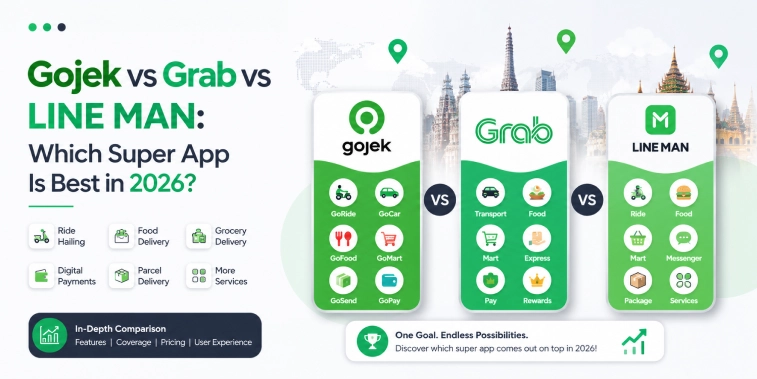
Among the leading super apps in Southeast Asia, Gojek, Grab, and LINE MAN have established themselves as major players by offering a wide range of digital services through a unified ecosystem. Each platform has developed unique strengths, serving millions of users while partnering with merchants, drivers, and service providers across different markets.
For entrepreneurs and startups planning to launch their own multi-service platform, understanding the differences between these successful super apps is essential. Comparing their features, business models, target markets, and service offerings can help businesses identify the right strategy for building a competitive on-demand marketplace.
In this guide, we’ll compare Gojek, Grab, and LINE MAN to explore their core services, strengths, business models, and user experience. We’ll also discuss which platform offers the most comprehensive ecosystem and why many entrepreneurs choose a Gojek Clone App to launch their own scalable super app in 2026.
What Are Super Apps?
A super app is a mobile application that combines multiple on-demand services into a single platform. Instead of switching between different apps for transportation, food ordering, shopping, payments, and other daily needs, users can complete all these activities within one application.
The primary goal of a super app is to provide convenience by offering a seamless digital experience while reducing the need to install multiple individual applications.
Most modern super apps include services such as:
- Ride-hailing
- Food delivery
- Grocery delivery
- Parcel and courier delivery
- Digital wallet and payments
- Bill payments
- Home services
- Medicine delivery
- Appointment booking
For customers, super apps simplify daily life by providing quick access to multiple services through a single account and payment system.
For businesses, super apps create additional revenue opportunities by bringing different services together under one platform. Customers who initially use one service often discover and use other services, increasing engagement and customer retention.
The popularity of super apps has encouraged many startups to adopt the same business model because it allows them to expand gradually by adding new services as their customer base grows.
Overview of Gojek, Grab, and LINE MAN
Although Gojek, Grab, and LINE MAN all operate as super apps, each platform has evolved differently based on its primary market and business strategy.
Gojek
Gojek is an Indonesia-based super app that offers a wide range of on-demand services through a single platform. Initially launched as a ride-hailing service, it has expanded into a comprehensive digital ecosystem supporting transportation, food delivery, grocery delivery, courier services, digital payments, and home services.
Its diverse service portfolio allows users to manage many daily activities without leaving the application. This multi-service approach has made Gojek one of Southeast Asia’s leading super apps and a popular inspiration for businesses developing white-label multi-service platforms.
Grab
Grab is a Singapore-based super app that has grown from a ride-hailing platform into one of Southeast Asia’s largest digital ecosystems. Today, it offers transportation services, food delivery, grocery delivery, parcel delivery, digital payments, financial services, and merchant solutions.
Grab focuses on providing a seamless customer experience while supporting businesses, drivers, delivery partners, and merchants through an integrated platform. Its continuous expansion into financial technology has further strengthened its position within the region’s digital economy.
LINE MAN
LINE MAN is a Thailand-based super app designed to simplify everyday services through a single mobile platform. It offers food delivery, taxi booking, parcel delivery, convenience services, and merchant solutions for businesses and local restaurants.
The platform has built a strong presence in Thailand by focusing on local market needs and partnering with restaurants, retailers, and delivery partners. Its user-friendly interface and extensive merchant network have made LINE MAN one of the country’s most recognized on-demand service platforms.
While all three platforms share the goal of providing multiple services within one application, each has developed unique strengths based on its target audience, regional presence, and business strategy. Understanding these differences helps entrepreneurs choose the right model when planning to build their own super app.
Feature Comparison: Gojek vs Grab vs LINE MAN
All three platforms—Gojek, Grab, and LINE MAN—have evolved into comprehensive super apps by offering multiple on-demand services through a single application. While they share several core features, each platform has developed its own strengths based on regional demand, business strategy, and customer preferences.
Let’s compare their key features.
Ride-Hailing Services
Ride-hailing remains one of the core services offered by both Gojek and Grab. Users can book rides, track drivers in real time, estimate fares, and make cashless payments through the app. These platforms support various transportation options, including motorcycles and cars, depending on the region.
LINE MAN also offers taxi booking services in Thailand, enabling users to book transportation conveniently through the same application. However, compared to Gojek and Grab, its transportation services are more region-specific.
Food Delivery
Food delivery is one of the most frequently used services across all three super apps.
Gojek connects customers with thousands of restaurants, allowing them to browse menus, place orders, track deliveries, and make secure payments.
Grab provides an extensive food delivery network with restaurant partnerships, scheduled deliveries, and promotional offers to enhance the customer experience.
LINE MAN has established a strong food delivery ecosystem in Thailand by partnering with local restaurants and offering quick deliveries through an easy-to-use ordering process.
Each platform focuses on delivering a seamless food ordering experience while supporting restaurants with digital ordering and delivery management.
Grocery Delivery
Modern consumers increasingly prefer ordering groceries online, making grocery delivery an important feature of super apps.
Gojek and Grab both support grocery delivery through partnerships with supermarkets and local stores, allowing users to order daily essentials with doorstep delivery.
LINE MAN also offers grocery and convenience store delivery within Thailand, helping customers purchase household essentials without visiting physical stores.
Parcel and Courier Delivery
Courier services have become an essential part of the super app ecosystem.
Gojek enables users to send documents, packages, and parcels quickly through its delivery network.
Grab also provides parcel delivery services for individuals and businesses, making local deliveries more efficient.
LINE MAN supports parcel delivery within its operating regions, offering users another convenient service through the same application.
Digital Wallet and Payments
Digital payment integration improves convenience and simplifies transactions.
Gojek supports digital payments through its integrated wallet, enabling users to pay for multiple services without switching applications.
Grab also provides digital payment solutions along with financial services such as cashless transactions, rewards, and merchant payment options.
LINE MAN supports secure online payment methods that simplify ordering and improve the overall customer experience.
Home and Lifestyle Services
One area where Gojek stands out is its broader range of lifestyle and home services. Depending on the market, users can access services such as home cleaning, beauty services, and other on-demand assistance through the platform.
Grab focuses primarily on transportation, delivery, financial services, and merchant solutions, while LINE MAN concentrates on services that align with everyday consumer needs in Thailand.
User Experience
All three platforms provide intuitive interfaces designed for quick navigation and efficient service booking.
Customers can:
- Create a single account
- Access multiple services
- Save payment methods
- Track orders in real time
- Receive instant notifications
- View booking history
This unified experience improves customer convenience and encourages users to rely on one platform for multiple daily activities.
Business Model Comparison
Although Gojek, Grab, and LINE MAN offer similar services, their business models are designed to generate revenue from multiple sources while supporting long-term growth.
Commission-Based Revenue
One of the primary revenue streams for all three platforms is commission earned from completed transactions. Restaurants, merchants, drivers, and service providers pay a percentage of each completed booking or order.
Delivery and Service Fees
Customers pay delivery or service fees based on factors such as distance, demand, service type, and delivery time. These fees contribute significantly to overall platform revenue.
Merchant Partnerships
All three companies collaborate with restaurants, retailers, grocery stores, pharmacies, and local businesses to expand their service offerings while helping merchants reach a larger customer base.
Subscription Programs
Many super apps offer membership programs that provide benefits such as discounted delivery fees, exclusive promotions, cashback rewards, and priority services. These subscriptions generate recurring revenue while increasing customer loyalty.
Advertising Opportunities
Merchants and businesses can promote their products and services through sponsored listings, featured placements, and in-app advertisements. This creates an additional revenue stream while improving business visibility.
Financial and Digital Payment Services
Digital wallets and integrated payment solutions have become valuable components of modern super apps.
Gojek and Grab have expanded into digital financial services by offering cashless payments, merchant payment solutions, and other fintech-related features. These services strengthen customer engagement while creating additional business opportunities.
LINE MAN also supports secure digital payments, helping customers complete transactions quickly and conveniently.
Key Differences Between Gojek, Grab, and LINE MAN
Although Gojek, Grab, and LINE MAN all operate as successful super apps, each platform has developed its own identity based on regional markets, service offerings, and business strategy. Understanding these differences helps entrepreneurs identify the right business model when planning to build their own multi-service platform.
Gojek
Gojek is widely recognized for its comprehensive multi-service ecosystem. Originally launched as a ride-hailing platform in Indonesia, it has evolved into a super app offering transportation, food delivery, grocery delivery, courier services, digital payments, home services, and various lifestyle solutions.
Key Advantages
- Extensive multi-service ecosystem
- Strong digital payment integration
- Large network of merchants and drivers
- Wide range of lifestyle and home services
- Scalable business model
- High customer engagement across multiple services
Considerations
Gojek’s strongest market presence is concentrated in Indonesia and selected Southeast Asian countries. Businesses planning international expansion need to adapt the platform to local regulations, customer preferences, and operational requirements.
Grab
Grab has grown into one of Southeast Asia’s leading digital platforms by combining transportation, delivery, and financial services within one application. In addition to ride-hailing and food delivery, Grab has expanded into digital payments, financial products, and merchant solutions, creating a well-rounded ecosystem for consumers and businesses.
Key Advantages
- Strong presence across Southeast Asia
- Reliable transportation and food delivery services
- Integrated digital payment and financial solutions
- Large merchant and delivery partner network
- Continuous innovation and platform improvements
- Strong brand recognition
Considerations
Managing a large regional ecosystem requires ongoing investment in technology, customer support, and partner management. Businesses following the Grab model should also prepare for strong competition in multiple service categories.
LINE MAN
LINE MAN is a Thailand-based super app that focuses on delivering convenient everyday services through a single platform. It has built a strong reputation in Thailand by partnering with local restaurants, retailers, and businesses while offering food delivery, taxi booking, parcel delivery, and convenience services.
Key Advantages
- Strong market presence in Thailand
- Excellent local merchant partnerships
- User-friendly mobile application
- Reliable food and parcel delivery services
- Deep understanding of local customer needs
- Strong merchant ecosystem
Considerations
Unlike Gojek and Grab, LINE MAN primarily serves the Thai market. Businesses using this model for inspiration may need to expand service categories and regional coverage when targeting a broader audience.
Which Super App Is Best for Businesses?
There is no single super app that is ideal for every business. The right platform depends on your target market, customer expectations, service offerings, and long-term growth strategy.
If your goal is to build a diversified multi-service marketplace, Gojek offers one of the most comprehensive business models. Its combination of transportation, food delivery, courier services, digital payments, and lifestyle services demonstrates how multiple revenue streams can operate within one application.
Businesses focused on transportation and financial technology may find Grab’s ecosystem particularly appealing. Its integration of mobility services, digital payments, merchant solutions, and financial products provides valuable insights for companies looking to build a technology-driven platform.
For businesses targeting a specific region with strong local partnerships, LINE MAN demonstrates how focusing on customer needs and merchant relationships can create a successful and trusted super app.
Ultimately, entrepreneurs should evaluate several factors before selecting a business model, including:
- Target market
- Service categories
- Revenue opportunities
- Scalability
- Customer experience
- Expansion strategy
Rather than copying a single platform, many businesses combine the best features of Gojek, Grab, and LINE MAN to create a customized super app tailored to their market.
Why Build a Gojek Clone App Instead?
Instead of replicating an existing super app exactly, many entrepreneurs choose a Gojek Clone App because it offers a flexible and cost-effective foundation for launching a multi-service marketplace.
A white-label Gojek Clone App includes the essential features required to operate a modern super app while allowing complete customization to match specific business requirements.
Key benefits include:
- Faster time-to-market
- Lower development costs
- Complete branding customization
- Multiple revenue streams
- Scalable architecture
- Easy integration of new services
- Support for multiple languages and currencies
Businesses can launch with core services such as ride-hailing and food delivery, then gradually expand into grocery delivery, courier services, home services, pharmacy delivery, beauty services, and other on-demand offerings as customer demand grows.
For startups and established businesses alike, a Gojek Clone App provides a practical, scalable, and future-ready solution for entering the rapidly growing super app market in 2026.
Conclusion
Super apps have transformed the on-demand economy by combining multiple services into a single, user-friendly platform. Gojek, Grab, and LINE MAN have each built successful ecosystems by offering services such as ride-hailing, food delivery, grocery delivery, courier services, and digital payments. While they share many similarities, each platform has developed unique strengths based on its target market and business strategy.
For entrepreneurs planning to launch a multi-service business, studying these platforms provides valuable insights into building a scalable and customer-focused application. The right choice depends on your target audience, service offerings, regional focus, and long-term business objectives.
Rather than replicating an existing platform, many startups choose a Gojek Clone App because it offers a faster, more cost-effective way to launch a customizable super app. With the flexibility to add new services, customize branding, and support future expansion, a white-label solution enables businesses to build a competitive platform while reducing development time and costs.
As the demand for all-in-one digital platforms continues to grow in 2026, investing in a scalable Gojek Clone App can help businesses create a strong market presence and deliver convenient, multi-service experiences that meet evolving customer expectations.
Frequently Asked Questions (FAQs)
1. What is the difference between Gojek, Grab, and LINE MAN?
Gojek, Grab, and LINE MAN are all super apps that offer multiple on-demand services through a single platform. Gojek is known for its broad multi-service ecosystem, Grab combines transportation with financial services, and LINE MAN focuses primarily on food delivery, transportation, and local convenience services in Thailand.
2. Which super app offers the most services?
Among the three, Gojek provides one of the most comprehensive service ecosystems, including ride-hailing, food delivery, grocery delivery, courier services, digital payments, home services, and other lifestyle solutions. However, the availability of services may vary depending on the country and region.
3. Which platform is better for startups?
There is no single platform that suits every business. Entrepreneurs should evaluate their target market, business goals, and service offerings before choosing a model. Many startups use the Gojek business model because of its flexibility, scalability, and ability to support multiple on-demand services within one application.
4. Why should businesses build a Gojek Clone App?
A Gojek Clone App allows businesses to launch a multi-service platform quickly without developing everything from scratch. It offers faster deployment, lower development costs, customizable branding, multiple revenue opportunities, and the flexibility to expand services as the business grows.
5. How much does it cost to develop a super app like Gojek?
The development cost depends on factors such as the number of services, app complexity, supported platforms, custom features, third-party integrations, and development approach. Many businesses choose a white-label Gojek Clone solution because it reduces development time and overall costs compared to building a super app from scratch.

Parth Kulkarni
Managing Director
Parth Kulkarni is the Managing Director with strong expertise in IT and on-demand app solutions, focused on empowering startups and enterprises with scalable digital products. His strategic leadership and business insight drive innovation, ensuring consistent client success and long-term growth.
