


Introduction
The online grocery industry is growing rapidly as consumers increasingly prefer the convenience of ordering groceries from their smartphones. Instead of spending time visiting supermarkets, customers can browse products, compare prices, place orders, and receive deliveries at their doorstep within hours or even minutes. This shift in consumer behavior has created significant opportunities for startups, retailers, supermarket chains, and entrepreneurs looking to launch digital grocery delivery businesses.
With the rise of hyperlocal commerce, digital payments, and faster delivery expectations, businesses need reliable technology to compete in today’s market. However, building a grocery delivery platform from scratch can require substantial investments in development, testing, maintenance, and ongoing updates.
A white-label grocery delivery app offers a faster and more cost-effective alternative. It is a ready-made software solution that includes all the essential features needed to run a successful grocery delivery business. Companies can customize the platform with their own branding, business model, payment gateways, languages, and delivery operations without starting from the ground up.
Whether you want to launch a single-store grocery app or a multi-vendor marketplace connecting multiple supermarkets, a white-label solution provides the flexibility to grow with your business. It also reduces development time, accelerates market entry, and allows businesses to focus on customer acquisition and operational efficiency.
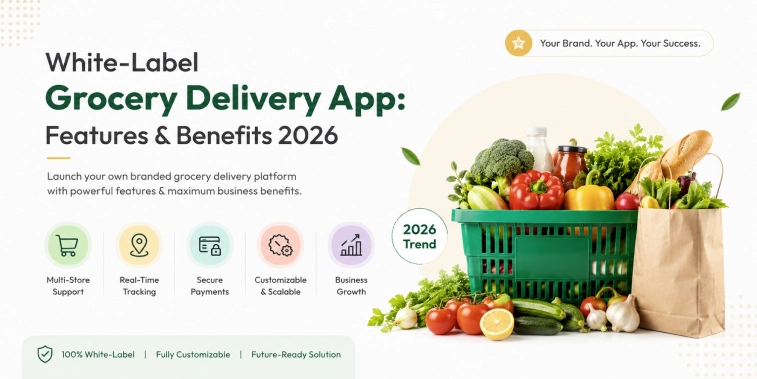
In this guide, we’ll explore everything you need to know about White-Label Grocery Delivery App Development in 2026, including how the platform works, why the industry is expanding, and the key features and benefits that make it an ideal solution for modern grocery businesses.
What Is a White-Label Grocery Delivery App?
A white-label grocery delivery app is a pre-built, customizable software solution that enables businesses to launch their own branded grocery delivery platform quickly and efficiently. Instead of developing an application from scratch, businesses can customize an existing platform with their logo, colors, payment methods, delivery zones, and operational workflows.
The platform connects customers, grocery stores, delivery partners, and administrators through a single integrated system, making grocery ordering and delivery simple and efficient.
A typical white-label grocery delivery app consists of four core components:
Customer App
Customers can browse grocery categories, search for products, add items to their cart, schedule deliveries, make secure payments, and track their orders in real time. The app provides a seamless shopping experience that encourages repeat purchases.
Store/Merchant Panel
The merchant panel allows grocery stores to manage products, inventory, pricing, incoming orders, promotions, and customer requests from a centralized dashboard. It helps store owners streamline operations and maintain accurate stock levels.
Delivery Partner App
Delivery partners receive order requests, access GPS navigation for optimized routes, update delivery statuses, and track their earnings. This improves delivery efficiency while ensuring timely order fulfillment.
Super Admin Dashboard
The admin dashboard gives business owners complete control over the platform. Administrators can manage users, merchants, delivery partners, commissions, service areas, payments, reports, and promotional campaigns from a single interface.
A white-label grocery delivery app can support a wide variety of product categories, including:
- Fresh Fruits & Vegetables
- Dairy Products
- Bakery Items
- Meat & Seafood
- Frozen Foods
- Snacks & Beverages
- Household Essentials
- Personal Care Products
- Organic & Health Foods
Its customizable architecture makes it suitable for local grocery stores, supermarket chains, and multi-vendor grocery marketplaces looking to expand their digital presence.
Why Is the Grocery Delivery Industry Growing?
The grocery delivery market continues to expand as consumers prioritize convenience, speed, and flexible shopping experiences. Digital technology has transformed the way people purchase daily essentials, making online grocery shopping a preferred choice for millions of customers worldwide.
Several key factors are driving this growth.
Convenience and Time Savings
Busy lifestyles have increased demand for services that save time. Grocery delivery apps allow customers to order essentials from anywhere and have them delivered directly to their homes, eliminating the need to visit physical stores.
Growing Smartphone Usage
The widespread use of smartphones and affordable internet access has made online grocery shopping easier than ever. Customers can browse products, compare prices, and place orders anytime using a mobile app.
Demand for Faster Deliveries
Consumers now expect same-day and scheduled deliveries for everyday essentials. Businesses that offer fast and reliable delivery services gain a competitive advantage while improving customer satisfaction.
Secure Digital Payments
Modern grocery delivery platforms support multiple payment options, including credit cards, debit cards, digital wallets, UPI, and net banking. Secure and flexible payment methods make online shopping more convenient and trustworthy.
Expansion of Hyperlocal Commerce
Customers increasingly prefer buying groceries from nearby supermarkets and local stores. Hyperlocal delivery platforms connect local retailers with nearby customers, reducing delivery times while supporting neighborhood businesses.
Better Customer Experience
Features such as real-time order tracking, personalized recommendations, instant notifications, and easy reordering have significantly improved the online grocery shopping experience. These conveniences encourage repeat purchases and help businesses build long-term customer loyalty.
As customer expectations continue to evolve, investing in a white-label grocery delivery app enables businesses to capitalize on the growing demand for convenient, technology-driven grocery shopping solutions.
How Does a White-Label Grocery Delivery App Work?
A white-label grocery delivery app simplifies the grocery shopping process by connecting customers, grocery stores, delivery partners, and administrators on a single platform. From product selection to doorstep delivery, every step is designed to provide a seamless and efficient experience.
Here’s how the platform typically works.
Step 1: User Registration
Customers download the grocery delivery app and register using their mobile number, email address, or social media account. Once registered, they can save delivery addresses, manage their profile, and securely store preferred payment methods for faster checkout.
Step 2: Browse Grocery Categories
Users can explore products through organized categories, making shopping simple and convenient.
Common grocery categories include:
- Fresh Fruits & Vegetables
- Dairy Products
- Bakery Items
- Meat & Seafood
- Frozen Foods
- Snacks & Beverages
- Household Essentials
- Personal Care Products
- Organic Foods
A well-structured catalog helps customers quickly find the products they need.
Step 3: Search Products
Customers can search for products using keywords or apply filters based on category, brand, price, discounts, or popularity. Smart search functionality improves product discovery and enhances the overall shopping experience.
Step 4: Add Products to Cart
After selecting products, customers add items to their shopping cart, review quantities, apply discount coupons, and choose a preferred delivery time before proceeding to checkout.
The app also displays the estimated delivery time and complete order summary for full pricing transparency.
Step 5: Place the Order
Customers confirm their delivery address, choose a payment method, and place the order. The platform instantly forwards the order details to the selected grocery store for processing.
Step 6: Store Accepts and Packs the Order
The grocery store receives a real-time notification about the new order. Store staff verify product availability, prepare the order, pack the items, and update the order status. Customers receive notifications throughout the preparation process.
Step 7: Delivery Partner Assignment
Once the order is ready, the system automatically assigns it to the nearest available delivery partner. Drivers receive pickup details, customer information, and optimized navigation routes through the delivery app.
Step 8: Live Order Tracking
Customers can monitor the delivery in real time using GPS tracking. They receive updates when the order is picked up, en route, and nearing the delivery location, improving transparency and customer confidence.
Step 9: Secure Delivery & Feedback
After successful delivery, customers receive a digital invoice and can rate both the grocery store and the delivery partner. Customer feedback helps businesses improve service quality and build trust.
Must-Have Features of a White-Label Grocery Delivery App
A successful white-label grocery delivery app should provide powerful features that improve customer convenience, simplify grocery store operations, streamline deliveries, and help administrators manage the platform efficiently.
Customer App Features
Smart Homepage
A personalized homepage displays featured products, trending categories, seasonal offers, and recommended items based on customer preferences, making shopping faster and more engaging.
Advanced Search & Filters
Customers can quickly locate products using intelligent search and filters based on category, brand, price, availability, discounts, and ratings.
Shopping Cart & Wishlist
Users can add products to their cart for immediate purchase or save favorite items to a wishlist for future shopping.
Real-Time Order Tracking
Integrated GPS tracking allows customers to monitor every stage of their delivery, from order confirmation to doorstep arrival.
Multiple Payment Options
The platform should support secure payment methods such as the following:
- Credit & Debit Cards
- UPI
- Digital Wallets
- Net Banking
- Cash on Delivery (Optional)
Providing multiple payment choices improves customer convenience and reduces abandoned carts.
Scheduled Deliveries
Customers can place instant orders or schedule deliveries for a preferred date and time, giving them greater flexibility.
Ratings & Reviews
Users can rate products, grocery stores, and delivery services while sharing feedback that helps other customers make informed decisions.
Push Notifications
Real-time notifications keep customers informed about:
- Order Confirmation
- Packing Updates
- Delivery Status
- Promotional Offers
- Discount Campaigns
Grocery Store/Merchant Panel
Product & Inventory Management
Store owners can easily manage product listings, update inventory, adjust pricing, and organize products into categories through a centralized dashboard.
Order Management
Merchants can accept, prepare, update, and complete customer orders while tracking order history and fulfillment performance.
Promotions & Discounts
The merchant dashboard allows businesses to create promotional campaigns, discount coupons, bundle offers, and seasonal sales to increase customer engagement.
Reports & Analytics
Detailed reports provide insights into sales performance, popular products, customer purchasing trends, and inventory status, helping businesses make informed decisions.
Delivery Partner App
Instant Delivery Requests
Drivers receive real-time delivery requests with complete pickup and delivery information, allowing them to respond quickly.
GPS Navigation
Built-in navigation suggests optimized routes, helping delivery partners reduce travel time and complete deliveries efficiently.
Availability Management
Drivers can switch between online and offline modes based on their working schedule, giving them greater flexibility.
Earnings Dashboard
Delivery partners can track completed deliveries, daily earnings, incentives, and payment history through a dedicated dashboard.
Super Admin Dashboard
Customer & Merchant Management
Administrators can manage customer accounts, grocery stores, delivery partners, and platform activities from one centralized dashboard.
Commission & Delivery Zone Management
Business owners can configure commission rates, define delivery areas, manage service zones, and expand operations into new locations.
Coupons & Marketing Campaigns
The admin panel supports referral programs, promotional campaigns, discount coupons, and seasonal offers to attract new customers and retain existing ones.
Business Analytics
Comprehensive analytics provide insights into order volume, revenue, customer growth, merchant performance, and delivery efficiency, enabling data-driven business decisions and long-term growth.
Benefits of Developing a White-Label Grocery Delivery App
As online grocery shopping continues to gain popularity, businesses need a reliable and scalable platform to meet customer expectations. A white-label grocery delivery app offers a ready-to-launch solution that helps entrepreneurs, retailers, and supermarket chains establish a strong digital presence without investing in lengthy custom development.
Here are the key benefits of choosing a white-label grocery delivery solution.
Faster Time-to-Market
Developing a grocery delivery app from scratch can take several months. A white-label solution significantly reduces this timeline by providing pre-built features that only require branding and customization.
Businesses can launch their platform quickly, attract customers sooner, and start generating revenue without long development cycles.
Cost-Effective Development
Custom software development often involves high costs for design, coding, testing, deployment, and ongoing maintenance.
A white-label grocery delivery app minimizes these expenses by offering a proven platform that can be customized to match your business requirements. This allows businesses to invest more in marketing, customer acquisition, and operational growth.
Complete Brand Customization
Although the software is pre-built, it can be fully customized to reflect your business identity.
Businesses can personalize the following:
- Logo and Brand Colors
- User Interface
- Payment Gateways
- Languages and Currencies
- Delivery Charges
- Commission Structure
- Service Areas
This creates a unique shopping experience while maintaining a professional brand image.
Multiple Revenue Streams
A grocery delivery platform generates income through several business models instead of relying on a single source.
Popular revenue streams include:
- Commission from Grocery Stores
- Delivery Charges
- Featured Store Listings
- Promotional Advertisements
- Subscription Membership Plans
- Service Fees
Using multiple monetization strategies helps improve profitability and ensures long-term business sustainability.
Improved Customer Experience
Customer satisfaction is one of the biggest factors behind the success of any grocery delivery business.
Features like real-time order tracking, secure payments, scheduled deliveries, personalized product recommendations, and instant notifications create a smooth shopping experience that encourages repeat purchases and strengthens customer loyalty.
Easy Business Scalability
A white-label grocery delivery app is designed to grow with your business.
As demand increases, you can:
- Expand into New Cities
- Add More Grocery Stores
- Onboard Additional Delivery Partners
- Introduce New Product Categories
- Support Higher Order Volumes
This flexibility allows businesses to scale efficiently without rebuilding the platform.
Future Trends in Grocery Delivery Apps
Technology continues to transform the grocery delivery industry. Businesses that adopt emerging innovations can improve operational efficiency and offer better customer experiences.
AI-Powered Recommendations
Artificial intelligence analyzes customer preferences and purchase history to recommend relevant products and personalized offers, increasing customer engagement and average order value.
Quick Commerce (Q-Commerce)
Consumers increasingly expect groceries to arrive within minutes. Businesses are investing in micro-fulfillment centers and optimized delivery networks to support faster deliveries.
Smart Inventory Management
Real-time inventory synchronization helps stores manage stock efficiently, reduce order cancellations, and improve product availability across multiple locations.
Sustainable Delivery
Many grocery delivery businesses are adopting eco-friendly packaging, paperless billing, and optimized delivery routes to reduce environmental impact while improving operational efficiency.
Why Choose a White-Label Grocery Delivery Solution?
Launching an online grocery business requires reliable technology, efficient logistics, and a scalable platform. Developing a custom application can be expensive and time-consuming, especially for startups and growing businesses.
A white-label grocery delivery solution provides a faster and more affordable alternative. It includes essential features such as customer ordering, merchant management, delivery tracking, secure payments, and an admin dashboard, allowing businesses to launch quickly with minimal development effort.
The platform can be customized with your own branding, business workflows, payment gateways, languages, currencies, and delivery zones, ensuring it aligns with your operational needs and target market.
As your business grows, the solution can easily support multiple grocery stores, delivery partners, cities, and additional services without requiring major redevelopment.
Whether you’re launching a local grocery delivery startup or expanding an established retail business, a white-label grocery delivery solution offers the flexibility, scalability, and cost efficiency needed to succeed in the competitive grocery delivery market in 2026.
Conclusion
The grocery delivery industry continues to grow as consumers increasingly prefer the convenience of ordering daily essentials online. A white-label grocery delivery app provides businesses with a fast, scalable, and cost-effective way to launch a branded grocery delivery platform without the complexity of building software from scratch.
By offering features such as smart product search, real-time order tracking, secure payment options, inventory management, delivery partner coordination, and a centralized admin dashboard, businesses can streamline operations while delivering a seamless shopping experience. Whether you’re launching a local grocery delivery service or a multi-vendor marketplace, a white-label solution provides the flexibility to adapt to changing customer demands and expand into new markets.
As technologies like artificial intelligence, hyperlocal commerce, and quick commerce continue to reshape the grocery industry, investing in a white-label grocery delivery app can help businesses stay competitive and build a sustainable online grocery business in 2026 and beyond.
Frequently Asked Questions (FAQs)
1. What is a White-Label Grocery Delivery App?
A white-label grocery delivery app is a pre-built grocery delivery software solution that businesses can customize with their own branding, logo, payment gateways, languages, and business model. It allows startups, retailers, and supermarket chains to launch an online grocery delivery platform quickly without developing the application from scratch.
2. How does a white-label grocery delivery app work?
The platform connects customers, grocery stores, delivery partners, and administrators through a single ecosystem. Customers browse products, place orders, make secure payments, and track deliveries in real time. Grocery stores prepare orders, delivery partners complete deliveries, and administrators manage the platform through a centralized dashboard.
3. What features should a grocery delivery app include?
A modern grocery delivery app should include features such as:
- Product Categories
- Smart Search & Filters
- Shopping Cart & Wishlist
- Real-Time Order Tracking
- Multiple Payment Options
- Scheduled Deliveries
- Inventory Management
- Delivery Partner Tracking
- Push Notifications
- Reports & Analytics
These features improve customer satisfaction while helping businesses manage operations efficiently.
4. Can I customize a white-label grocery delivery app?
Yes. A white-label grocery delivery app is fully customizable. Businesses can personalize the app with their own branding, user interface, payment gateways, delivery zones, languages, currencies, commission models, and additional features to match their operational requirements and target audience.
5. How much does it cost to develop a white-label grocery delivery app?
The development cost depends on several factors, including customization requirements, supported platforms (Android, iOS, and Web), third-party integrations, advanced features, and business goals. Compared to custom software development, a white-label solution offers a faster and more affordable way to launch a professional grocery delivery platform.

Parth Kulkarni
Managing Director
Parth Kulkarni is the Managing Director with strong expertise in IT and on-demand app solutions, focused on empowering startups and enterprises with scalable digital products. His strategic leadership and business insight drive innovation, ensuring consistent client success and long-term growth.
