


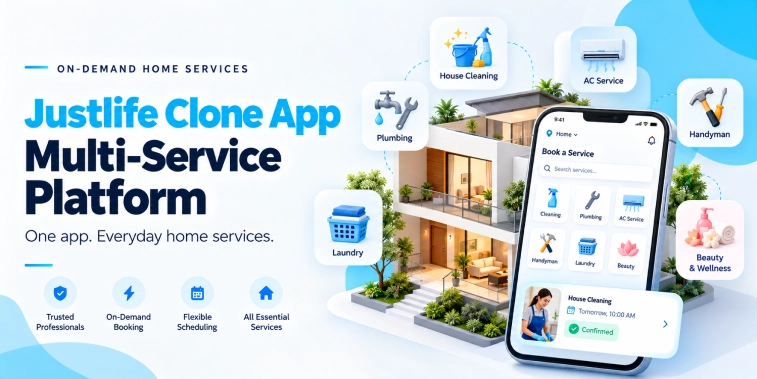
Introduction
The home services industry has increasingly moved toward digital platforms as customers look for convenient ways to book cleaning, maintenance, beauty, wellness, and other services from their smartphones. Instead of contacting multiple service providers separately, customers can use on-demand platforms to discover services, select suitable time slots, manage bookings, make payments, and receive service updates through one application.
A Justlife Clone App is a customizable on-demand multi-service platform inspired by the service marketplace model used by modern home-service businesses. It can bring different services together within one digital ecosystem and connect customers with service professionals through a centralized platform.
Depending on the business model, a Justlife-style platform can support services such as home cleaning, deep cleaning, maintenance, beauty services, wellness services, laundry, pest control, and other household services. Businesses can select the categories that match their target audience and expand the platform as demand grows.
For entrepreneurs, this model creates an opportunity to build a digital home-services business without limiting the platform to a single service category. A customizable solution can be adapted to the company’s branding, service area, pricing model, professional network, booking workflows, and operational requirements.
This guide explains what a Justlife Clone App is, how it works, its key features, business model, benefits, development cost factors, launch process, and challenges businesses should consider when entering the on-demand home services market.
What Is a Justlife Clone App?
A Justlife Clone App is a ready-made or customizable multi-service home services platform designed to connect customers with professionals offering different on-demand services.
The platform can bring multiple household and personal services into one application. Depending on the business strategy, categories may include home cleaning, deep cleaning, handyman services, maintenance, beauty treatments, wellness services, laundry, pest control, and other local services.
Customers can use the application to browse available services, select a category, choose a service, provide their location, select a preferred date and time, review pricing, confirm a booking, and manage the service request.
Service professionals can use a dedicated application or dashboard to manage their profiles, view assigned jobs, check schedules, update service status, and manage their earnings.
Administrators can control the complete platform through an admin panel. They can manage customers, professionals, services, bookings, payments, commissions, promotions, reviews, and other operational activities.
The term clone app does not mean copying another company’s protected branding, content, interface, or proprietary technology. Instead, it refers to a customizable software solution based on a proven business concept. Businesses can use their own branding, user experience, pricing strategy, service categories, and workflows.
How Does a Justlife Clone App Work?
A multi-service home services platform typically connects customers, service professionals, and administrators through a centralized digital system.
Service Discovery
Customers open the application and browse available service categories. A simple category structure helps customers quickly identify the service they need.
For example, a customer may choose home cleaning, beauty services, maintenance, laundry, or another available category.
Service Selection
After selecting a category, customers can review available services, descriptions, pricing information, duration, and other relevant details.
The platform can present different service packages based on customer requirements.
Location Selection
Customers provide their service location so the platform can identify whether the requested service is available in that area.
Location information can also help determine applicable pricing, service availability, and professional assignment.
Booking
Customers select an available date and time slot and confirm the service request. The platform records the booking and sends the relevant information to the service provider.
Professional Assignment
A suitable service professional can be assigned based on service category, location, availability, skills, and business rules.
The professional receives the job information through their application or dashboard.
Service Delivery
The professional arrives at the customer’s location and performs the requested service. The booking status can be updated throughout the process.
Customers can receive notifications about important booking events.
Completion and Feedback
After the service is completed, the professional updates the job status. Customers can provide ratings and reviews based on their experience.
This feedback can help businesses monitor service quality and identify opportunities for improvement.
Key Features of a Justlife Clone App
A successful multi-service home services platform needs functionality that supports customers, professionals, and administrators.
Customer Registration and Profile Management
Customers can create accounts, manage their contact information, save addresses, view booking history, and manage their service preferences.
Saved information can make future bookings faster and more convenient.
Service Category Management
The platform can organize multiple home services into clear categories. Businesses can add, modify, or deactivate categories according to their operating model.
A structured category system makes service discovery easier for customers.
Service Search and Discovery
Customers can browse services and search for suitable options based on category, location, availability, price, or other relevant criteria.
Clear service descriptions can help customers understand what is included before making a booking.
Service Packages
Businesses can offer different service packages based on customer needs. For example, cleaning services may include standard cleaning, deep cleaning, or specialized cleaning packages.
Packages can help businesses serve different customer requirements and pricing preferences.
Online Booking and Scheduling
Customers can choose suitable dates and time slots directly through the application.
The scheduling system can help prevent double bookings and provide professionals with a structured work calendar.
Professional Management
Service professionals can create profiles, manage availability, view assignments, update job statuses, and monitor their earnings.
Businesses can also establish verification and onboarding procedures before professionals begin accepting jobs.
Location and GPS Integration
Location functionality can help determine service availability and support professional assignment.
GPS and mapping integrations can also help professionals navigate to customer locations where appropriate.
Online Payments
The platform can support digital payment methods through integrated payment providers.
Customers can review applicable charges during checkout and receive payment confirmations after successful transactions.
Booking Management
Customers can view upcoming, active, completed, cancelled, or previous bookings from their accounts.
Professionals can similarly manage their assigned and completed services through their dashboard.
Push Notifications
Notifications can inform customers and professionals about booking confirmations, schedule changes, reminders, assignments, service status updates, and completed services.
Timely communication can improve the overall booking experience.
Ratings and Reviews
Customers can rate services and provide reviews after completion. Feedback can help businesses evaluate professional performance and maintain service standards.
Offers and Promotions
Businesses can create promotional campaigns, discounts, referral offers, and service-specific promotions to attract customers and encourage repeat bookings.
Admin Dashboard
The administrator dashboard can provide centralized control over customers, professionals, services, bookings, payments, commissions, reviews, promotions, and reports.
Administrators can use platform data to monitor operations and make informed business decisions.
Essential Panels in a Justlife Clone App
A multi-service platform normally requires different interfaces for each major participant.
Customer App
The customer application allows users to browse services, check prices, select service packages, schedule bookings, make payments, receive notifications, manage appointments, and submit reviews.
The interface should remain simple even when many service categories are available.
Service Professional App
Professionals can manage their profiles, availability, assigned bookings, service details, customer information, job status, and earnings.
The application can provide navigation support when professionals need to travel to customer locations.
Admin Panel
The admin panel provides centralized control over the entire platform. Administrators can manage users, professionals, service categories, bookings, payments, promotions, commissions, reviews, and platform settings.
Role-based administrative access can help ensure that sensitive functions are available only to authorized users.
Business Model of a Justlife Clone App
A multi-service home services platform can use several revenue models.
Commission-Based Revenue
The platform can charge service professionals or service providers a commission on completed bookings.
The commission structure can vary depending on service categories and business agreements.
Service Fees
Customers can be charged a service or platform fee where appropriate. The fee should be clearly displayed before booking confirmation.
Booking Fees
The business can apply a booking charge to eligible transactions. This can provide an additional revenue stream while keeping the service pricing structure transparent.
Subscription Plans
Businesses can introduce customer membership plans that provide benefits such as discounted services, priority booking, reduced service fees, or exclusive offers.
Subscription models can encourage repeat usage and provide recurring revenue.
Professional Subscription Plans
Service providers can also be offered premium subscription packages that provide additional benefits such as enhanced visibility, analytics, promotional opportunities, or access to additional platform tools.
Featured Service Listings
Professionals or service providers can pay for promotional placement within relevant categories.
Featured listings can increase visibility while creating another monetization opportunity for the platform.
Benefits of a Justlife Clone App
Multiple Services Through One Platform
A multi-service application allows customers to access several household and personal services through one account.
This creates a more convenient experience compared with managing separate applications for different services.
Wider Customer Reach
Businesses can offer several categories and target different customer needs through the same platform.
A broader service portfolio can create more opportunities to attract new customers.
Convenient Booking Experience
Customers can discover services, compare available options, select time slots, and complete bookings digitally.
This reduces dependence on phone calls and manual scheduling.
Centralized Operations
Businesses can manage customers, professionals, services, bookings, payments, and promotions through one administrative system.
Centralization can improve visibility across different service categories.
Scalable Business Model
A business can start with a limited number of services and expand into new categories and locations after establishing its initial customer base.
Better Professional Utilization
Scheduling and booking tools can help businesses organize professional availability and assign jobs according to location and service requirements.
How Much Does a Justlife Clone App Cost?
The cost of developing a Justlife Clone App depends on several factors, including the number of services, required features, platform support, customization level, integrations, UI/UX requirements, and operational complexity.
A basic platform supporting a limited number of home services generally costs less than a highly customized multi-service application with advanced booking automation, real-time tracking, multiple payment options, analytics, promotions, and extensive administrative functionality.
Important cost factors include:
- UI/UX design
- Customer application
- Professional application
- Admin dashboard
- Backend development
- Booking and scheduling system
- Payment gateway integration
- GPS and mapping services
- Push notifications
- Messaging functionality
- Analytics and reporting
- Testing and quality assurance
- Cloud hosting
- Maintenance and updates
Businesses should identify the essential features required for the initial launch before finalizing a development budget.
A phased development strategy can also help separate core functionality from future enhancements. This allows businesses to launch an initial version and introduce additional capabilities based on customer feedback and market demand.
Recurring costs should also be considered. These may include hosting, payment processing, third-party APIs, technical support, maintenance, security updates, and future feature development.
Steps to Launch a Justlife Clone App
1. Research the Target Market
Start by identifying customer demand, service gaps, competitor offerings, pricing expectations, and professional availability in the intended market.
Understanding the target audience helps determine which services should be included at launch.
2. Select Initial Service Categories
Choose services that have clear demand and can be delivered consistently.
A business may begin with cleaning and maintenance and later add beauty, wellness, laundry, pest control, or other services.
3. Define the Business Model
Determine how the platform will generate revenue. Possible options include commissions, booking fees, service charges, subscriptions, and promotional listings.
4. Plan the Service Workflow
Define how customers will request services, how professionals will receive bookings, how scheduling will work, how payments will be handled, and how cancellations and refunds will be managed.
5. Customize the Platform
Customize the platform with the business’s branding, service categories, pricing rules, service areas, payment methods, and operational requirements.
6. Onboard Service Professionals
Recruit suitable professionals and establish onboarding procedures. Depending on the market and service categories, businesses may need to verify professional qualifications, identity, experience, or other relevant information.
7. Test the Platform
Test registration, service discovery, booking, scheduling, professional assignment, payments, notifications, cancellations, reviews, and administrative workflows.
Testing should cover different customer and professional scenarios before launch.
8. Launch in a Focused Area
Starting in a selected city or service region can make it easier to manage service quality, professional availability, and customer support.
A focused launch can also help businesses understand local demand before expanding.
9. Monitor and Expand
After launch, monitor bookings, customer retention, cancellation rates, service quality, professional activity, customer feedback, and revenue.
These insights can help businesses improve the platform and introduce additional services or locations.
Challenges to Consider
Operating a multi-service home services platform involves several challenges.
One important challenge is maintaining consistent service quality across different categories. Cleaning, maintenance, beauty, and wellness services may require different professional qualifications, workflows, and customer expectations.
Professional availability can also affect booking reliability. A platform needs enough qualified professionals to fulfill customer requests within the selected service areas and time slots.
Another challenge is maintaining a simple customer experience. A platform offering many services can become difficult to navigate if categories and booking flows are not organized clearly.
Pricing can also vary significantly between service categories. Businesses need transparent pricing structures so customers understand what they are paying for before confirming a booking.
Cancellations, rescheduling, refunds, complaints, and disputes should also be addressed through clear policies.
Businesses should additionally consider applicable licensing, taxation, consumer protection, privacy, insurance, and other regulatory requirements in their target markets.
Conclusion
A Justlife Clone App can provide a practical foundation for businesses planning to enter the on-demand home services market with a multi-service platform.
By bringing cleaning, maintenance, beauty, wellness, laundry, pest control, and other services into one digital ecosystem, businesses can provide customers with a convenient way to discover, book, manage, and review home services.
The platform can also create opportunities for service professionals by connecting them with customers and providing digital tools for managing bookings, schedules, service requests, and earnings.
However, a successful multi-service platform requires more than an application. Businesses need a clear service strategy, reliable professional network, transparent pricing, effective customer support, and suitable operational processes.
Starting with a focused selection of services and a specific service area can provide a practical foundation for launch. As customer demand and professional capacity increase, businesses can expand into new categories and locations.
Frequently Asked Questions (FAQs)
1. What Is a Justlife Clone App?
A Justlife Clone App is a customizable on-demand multi-service platform designed to connect customers with professionals offering home and personal services. Depending on the business model, it can support cleaning, maintenance, beauty, wellness, laundry, pest control, and other service categories.
2. What Are the Key Features of a Justlife Clone App?
Key features can include customer registration, service categories, service search, service packages, online booking, scheduling, professional management, GPS integration, online payments, booking management, push notifications, ratings and reviews, promotions, and an admin dashboard.
3. How Does a Justlife Clone App Generate Revenue?
A Justlife Clone App can generate revenue through commissions on completed bookings, service or booking fees, customer subscriptions, professional subscription plans, and featured service listings. Businesses can select a combination of revenue models based on their target market and operating strategy.
4. How Can a Justlife Clone App Help Grow a Home Services Business?
A Justlife Clone App can help businesses bring multiple home and personal services together on one platform, simplify digital bookings, connect customers with service professionals, and create additional revenue opportunities. Expanding service categories can also help businesses reach different customer needs.
5. How Much Does It Cost to Develop a Justlife Clone App?
The cost depends on the number of service categories, required features, customization, supported platforms, UI/UX design, payment and GPS integrations, professional management tools, admin functionality, and scalability requirements. A basic platform generally costs less than a fully customized multi-service solution with advanced functionality and integrations.

Parth Kulkarni
Managing Director
Parth Kulkarni is the Managing Director with strong expertise in IT and on-demand app solutions, focused on empowering startups and enterprises with scalable digital products. His strategic leadership and business insight drive innovation, ensuring consistent client success and long-term growth.
