


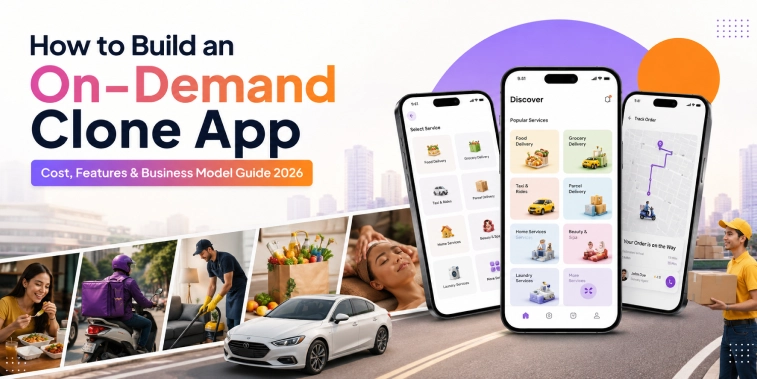
In today’s fast-paced digital landscape, on-demand apps have revolutionized the way consumers access services and products, from ride-hailing and food delivery to home services and more. As the demand for convenience continues to rise, entrepreneurs are increasingly interested in creating on-demand clone apps that replicate successful business models.
This comprehensive guide will delve into the essential aspects of building your own on-demand clone app, covering costs, key features, effective business models, and the latest trends in the industry for 2026. Whether you’re a seasoned developer or a budding entrepreneur, understanding these elements will be crucial to your success in this lucrative market.
Understanding On-Demand Clone Apps
Definition and Overview
On-demand clone apps are like the little siblings of the original unicorns in the app market. They take successful app ideas—think Uber, Airbnb, or DoorDash—and recreate them with a twist. They provide similar functionalities but can cater to niche markets or specific geographical areas. Basically, they’re the app equivalent of a remix: familiar but fresh, appealing to users who want the convenience of on-demand services without the price tag of being a trendsetter.
Market Demand and Growth Potential
The on-demand economy is booming faster than you can say “I need a ride.” With busy lifestyles driving consumer behavior, the demand for on-demand services is soaring. According to industry reports, this market is projected to skyrocket in the upcoming years, fueled by advancements in technology and mobile usage. If you can identify a gap in the market or a unique service angle, you could ride the wave of this growth potential straight to the bank.
Key Features of On-Demand Clone Apps
User Interface and Experience
The user interface (UI) is your app’s first impression—like the shiny wrapper of a candy bar. A clean, intuitive UI keeps users coming back for more. Prioritize an easy onboarding process and a smooth user experience (UX) to ensure customers stick around. Use easy navigation, appealing graphics, and maybe even a sprinkle of charm to make the app feel friendly and accessible.
Real-Time Tracking and Notifications
In a world where patience is on a short leash, real-time tracking is a must-have feature. Users expect to see exactly where their service is at any given moment—like a pizza arriving just in time for game night! Pair this with timely notifications (or, as I like to call them, “friendly nudges”) to keep users informed and engaged. It’s like sending a text to remind you that dinner is on the way, just without the emojis.
Payment Integration Options
When it comes to payments, less is not more. Your app should cater to various payment methods—credit/debit cards, digital wallets, and maybe even good old-fashioned cash, depending on your audience. Seamless payment integration can make or break the user experience. If paying feels like a chore, users might just abandon their cart and hit the road. So, make it as smooth as butter.
Admin Panel Functionality
Your app’s admin panel is like the control room of a spaceship—complex but crucial. Here, app owners can monitor user activity, manage services, and keep an eye on analytics. It should be user-friendly enough for non-techies, yet powerful enough to give you insights into what’s working (or not). A well-functioning admin panel enables you to optimize operations and keep your app thriving.
Estimating the Cost of Development
Factors Influencing Development Costs
When it comes to app development, costs can be as unpredictable as a cat on a hot tin roof. Several factors influence these costs, from the complexity of the app to the geographical location of your developers. Custom features, the technology stack, and the platforms (iOS, Android, or both) you want to target also play significant roles. Understanding these elements will help you budget wisely and avoid any wallet sabotage.
Breakdown of Costs by Features
Let’s get down to the nitty-gritty: a basic app may start at a few thousand dollars, but add advanced features like real-time tracking or payment gateways, and you’re looking at a wholesome chunk of change. A simple on-demand clone app could cost anywhere from $20,000 to $50,000, while a feature-packed version could easily exceed $100,000. Be sure to prioritize necessary features based on your target market to avoid cost creep.
Cost Comparisons: In-House vs. Outsourcing
Should you build your app with an in-house team or outsource? In-house development sounds great, but it often comes with higher salaries and overhead costs. Outsourcing, on the other hand, can save you some dollars, but make sure you thoroughly vet the developers to avoid any “oops-I-just-lost-my-money” scenarios. Weigh the pros and cons, and choose the option that aligns with your budget and timeline.
Choosing the Right Technology Stack
Front-End Technologies
Front-end technologies are your app’s face to the world—kind of like the makeup on a first date. Popular frameworks like React Native or Flutter can help you create stunning and responsive UIs across platforms. Choosing the right technology will make your app look good and feel good, keeping users coming back for more.
Back-End Technologies
The back-end is basically the wizard behind the curtain, managing data and server operations. Technologies like Node.js, Django, or Ruby on Rails are popular for building scalable back-end systems. Select one that suits your needs and ensures your app runs like a well-oiled machine. A robust back-end will keep your users happy and your data secure—because nobody likes a crash.
Database Options
Finally, let’s talk databases—the unsung heroes of your app. Whether you opt for SQL (like MySQL or PostgreSQL) or NoSQL (like MongoDB) will depend on the nature of your data and scalability needs. Choose wisely, because a solid database can help store, retrieve, and manage your data efficiently; think of it as the app equivalent of a neatly organized closet.
Business Models for On-Demand Apps
Commission-Based Model
In a world where everyone’s a little hesitant to part with their hard-earned cash, the commission-based model has risen to the top like cream—only less sticky. In this setup, the app takes a slice of the pie every time a transaction occurs. So, for every ride booked, meal delivered, or haircut scheduled, the app earns a percentage. It’s a win-win: users get what they need, and app owners enjoy passive income while they kick back—at least until the next update.
Subscription-Based Model
For those who love the magic of recurring revenue, the subscription-based model is like finding the fabled treasure chest of steady cash flow. In this setup, users pay a monthly fee for exclusive access to your app’s offerings. It’s like paying for Netflix, but instead of binge-watching, they’re binging on freshly delivered groceries or on-demand massages. Predictable revenue means less nail-biting—unless you’re worried about churn rates!
Freemium Model
Ah, the freemium model—the tantalizing lure of “free” attached to an equally enticing upgrade path. Users have access to fundamental features without spending a dime, but to unlock the juicy extras (think premium services, ad-free experiences, or special discounts), they have to whip out their wallets. This model thrives on the classic FOMO (Fear Of Missing Out) while allowing users to dip their toes in the water before committing. After all, who doesn’t love free stuff?
Steps to Build Your On-Demand Clone App
Market Research and Idea Validation
Before you dive headfirst into app development, put on your detective hat and do some sleuthing. Market research is your guiding compass to ensure your app isn’t just another fish in the sea. Analyze current trends, study competitors, and gather your potential users’ opinions like a pro. This step is vital—because nobody wants to build a glorious castle only to find out it’s just a fancy sandcastle at low tide.
Wireframing and Prototyping
Now it’s time to roll up those sleeves and sketch it out! Wireframing and prototyping are where your app’s vision begins to take tangible form. Think of it as creating a blueprint before constructing your dream home. Wireframes showcase the layout and user flow, while prototypes allow you to test functionalities. It’s the perfect opportunity to gain feedback and make changes without investing too much energy (or caffeine).
Development and Testing Phases
Let the coding commence! During this phase, developers turn your designs into a functioning app—like magic, but with more coffee. It’s essential to employ agile methodologies to ensure flexibility and adaptability. Once the initial build is done, enter the testing phase—where bugs go to meet their maker. Thorough testing is crucial, as no one wants a rogue glitch ruining the user experience. Remember, if your app crashes, users might “crash” right out of it!
Launching the App
Congratulations! You’ve curated, crafted, and coded your way to launch day. Launching your app is all about timing and strategy. Choose a date that’s free of major holidays or competitor launches, and prepare your marketing materials. Make a grand debut—think confetti, not crickets. And remember, post-launch is just as essential; gather user feedback and be ready to roll out updates faster than a barista serving lattes on a Monday morning.
Marketing Strategies for Launching Your App
Identifying Your Target Audience
Know thy audience—they’re not just faceless users lurking in the shadows! Dig into demographics, preferences, and behaviors to craft targeted marketing campaigns. Creating user personas can help you tailor your messaging and features to attract your ideal crowd. Remember, the more you understand them, the easier it is to win their hearts (and their downloads)!
Building a Pre-Launch Buzz
Start the hype train well before your app drops! Building a pre-launch buzz means strategically teasing your app through sneak peeks, countdowns, and engaging content. Consider hosting contests or beta testing to foster excitement. When users feel a part of the process, they’ll feel more invested—think of it as turning them into your very own cheerleaders (pom-poms optional).
Utilizing Social Media and Influencer Marketing
In a world of endless scrolling, social media is your best friend and influencer marketing is your secret weapon. Use platforms like Instagram, TikTok, and Twitter to share eye-catching content, testimonials, and updates. Collaborating with influencers can help you reach a larger audience, making your app the next big thing since sliced bread (or, at least, sliced avocado).
Future Trends in On-Demand App Development
Integration of AI and Machine Learning
Buckle up, because the future is here, and it’s packed with AI! Integrating artificial intelligence and machine learning into your app can enhance the user experience by personalizing services, optimizing delivery routes, and predicting user behavior. Think of it as your app’s very own crystal ball—nobody can resist a little predictive magic!
Focus on Sustainability and Ethical Practices
Consumers are more eco-conscious than ever, and embracing sustainability can set your app apart. From eco-friendly delivery options to ethical sourcing, conscious consumerism is the name of the game. Your app can not only meet the needs of users but also contribute positively to the planet. Saving the world, one app at a time?
Expansion into Emerging Markets
The world is vast and bursting with potential! Expanding into emerging markets can open doors to untapped audiences eager for on-demand services. Tailoring your app to meet local needs, preferences, and payment options will be key to successful entry. Think of it as taking your app on a world tour—who wouldn’t want to join in on the fun?Building an on-demand clone app presents a significant opportunity to tap into a thriving market characterized by consumer demand for convenience and efficiency. By carefully considering the features, costs, and business models discussed in this guide, you can set a solid foundation for your app’s success. As you embark on this journey, staying informed about industry trends and continuously adapting to user needs will be key to maintaining a competitive edge. With the right strategy and execution, your on-demand clone app could become the next big player in the market.
Frequently Asked Questions (FAQs)
What is an on-demand clone app?
An on-demand clone app is a software application that mimics the functionality and features of existing successful on-demand services, allowing entrepreneurs to enter the market quickly and effectively.
How much does it cost to develop an on-demand clone app?
The cost of developing an on-demand clone app can vary widely based on factors such as features, complexity, development team location, and chosen technology stack. A rough estimate can range from $10,000 to $150,000 or more.
What are the key features to include in my on-demand app?
Essential features typically include user registration, real-time tracking, payment integration, an admin dashboard, communication channels, and customer support functionalities.
How can I effectively market my on-demand app after launch?
Effective marketing strategies may include identifying your target audience, leveraging social media platforms, utilizing influencer partnerships, and implementing referral programs to generate buzz and attract users.

Parth Kulkarni
Managing Director
Parth Kulkarni is the Managing Director with strong expertise in IT and on-demand app solutions, focused on empowering startups and enterprises with scalable digital products. His strategic leadership and business insight drive innovation, ensuring consistent client success and long-term growth.
