


Introduction
The digital wellness industry is evolving rapidly, and mobile applications are playing a crucial role in transforming how people access health and wellness services. From booking a professional massage therapist to managing fitness routines, meditation sessions, nutrition plans, and mental wellness programs, consumers increasingly rely on mobile apps to support their lifestyles.
As demand for digital wellness solutions continues to grow, entrepreneurs and businesses are exploring opportunities to launch wellness-focused applications. However, one common question remains: should you invest in a Massage Therapist App or a comprehensive Wellness App?
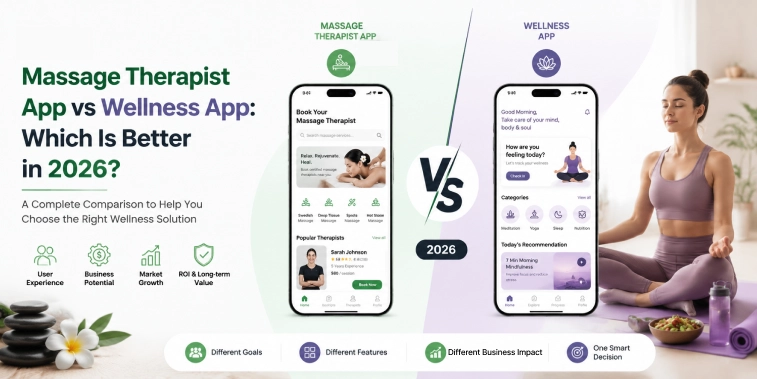
Both app categories offer unique benefits and revenue opportunities, but they serve different audiences and business goals. While Massage Therapist Apps focus on connecting users with licensed massage professionals, Wellness Apps provide a broader ecosystem that includes fitness, mindfulness, nutrition, health tracking, and wellness coaching.
In this blog, we’ll compare Massage Therapist Apps and Wellness Apps, explore their benefits, development costs, must-have features, and future trends to help you determine which app model is the right investment in 2026.
What Is a Massage Therapist App?
A Massage Therapist App is a specialized platform that allows users to discover, book, and pay for massage therapy services through a mobile application. These apps are designed to simplify appointment scheduling while helping therapists manage their services efficiently.
Users can browse therapist profiles, check availability, choose massage types, schedule appointments, and make secure payments directly from their smartphones.
Common massage services offered through these applications include:
- Swedish Massage
- Deep Tissue Massage
- Sports Massage
- Aromatherapy Massage
- Prenatal Massage
- Hot Stone Therapy
Massage Therapist Apps are particularly popular among busy professionals, athletes, wellness enthusiasts, and individuals seeking stress relief or physical recovery.
What Is a Wellness App?
A Wellness App is a comprehensive digital platform focused on improving overall health and well-being. Unlike a Massage Therapist App, a Wellness App provides multiple wellness services within a single ecosystem.
Modern Wellness Apps may include:
- Fitness programs
- Meditation sessions
- Nutrition planning
- Sleep tracking
- Mental health support
- Wellness coaching
- Habit tracking
- Health monitoring
These apps are designed to help users build healthy habits, improve physical fitness, manage stress, and maintain long-term wellness goals.
As consumers increasingly adopt holistic approaches to health, Wellness Apps have become one of the fastest-growing categories in the digital healthcare market.
Why Are These Apps Growing in 2026?
The demand for digital wellness solutions continues to increase due to changing consumer behavior and technological advancements.
Several factors are driving this growth:
Growing Health Awareness
People are becoming more conscious about their physical and mental well-being, leading to increased adoption of wellness technologies.
Convenience and Accessibility
Mobile apps allow users to access wellness services anytime and anywhere without visiting physical locations.
Increased Smartphone Usage
The widespread availability of smartphones has made wellness services more accessible to a global audience.
Rising Stress Levels
Busy lifestyles and work-related pressures have increased demand for relaxation, mindfulness, and wellness services.
Wearable Device Adoption
Smartwatches and fitness trackers are encouraging users to monitor their health and engage with wellness applications regularly.
These factors are creating significant opportunities for businesses investing in Massage Therapist App Development and Wellness App Development.
Benefits of Massage Therapist App Development
Developing a Massage Therapist App offers several business advantages.
Niche Market Focus
A massage booking app targets a specific audience, making marketing efforts more focused and effective.
Faster Development
Since the functionality is relatively specialized, development timelines are often shorter compared to comprehensive wellness platforms.
Lower Initial Investment
Massage Therapist App Development generally requires fewer features and integrations, resulting in lower development costs.
Simplified Operations
Managing therapist schedules, appointments, and customer bookings is easier within a focused platform.
Strong Local Demand
Massage services continue to experience steady demand in urban and suburban markets worldwide.
Benefits of Wellness App Development
Wellness App Development offers broader business opportunities and long-term scalability.
Larger Audience Reach
Wellness Apps appeal to users interested in fitness, nutrition, mindfulness, sleep improvement, and mental health.
Higher User Engagement
Unlike appointment-based apps, wellness platforms encourage daily usage through habit tracking and personalized recommendations.
Multiple Revenue Streams
Businesses can generate income through subscriptions, coaching sessions, premium content, wellness programs, and digital products.
Scalability
New wellness services can be added over time without rebuilding the entire platform.
Strong Industry Growth
The global wellness industry continues to expand, creating long-term opportunities for app-based businesses.
Massage Therapist App vs Wellness App: Key Differences
The primary difference lies in their scope and target audience.
A Massage Therapist App focuses on connecting users with therapists and facilitating appointment bookings. It is service-specific and caters to customers looking for professional massage treatments.
A Wellness App, on the other hand, serves as a complete wellness ecosystem. It addresses multiple aspects of health, including fitness, nutrition, mindfulness, and lifestyle improvement.
Massage Therapist Apps often generate revenue through bookings and commissions, while Wellness Apps benefit from recurring subscription models and multiple monetization opportunities.
Businesses looking for a niche solution may prefer Massage Therapist Apps, whereas companies seeking long-term scalability often choose Wellness Apps.
Which App Is Better for Startups?
For startups with limited budgets, a Massage Therapist App can be an excellent starting point.
Benefits include:
- Lower development costs
- Faster launch timelines
- Easier operational management
- Focused customer acquisition
However, startups with larger growth ambitions may benefit from investing in a Wellness App, particularly if they plan to offer multiple health and wellness services.
The choice depends on available resources, target market, and long-term business goals.
Which App Is Better for Long-Term Growth?
When evaluating long-term growth potential, Wellness Apps generally have a stronger advantage.
Reasons include:
- Broader market appeal
- Higher customer retention
- Recurring subscription revenue
- Multiple service offerings
- Greater scalability
Many successful wellness businesses start with a niche service and gradually expand into a comprehensive wellness platform.
This approach combines focused market entry with sustainable long-term growth.
Must-Have Features in 2026
To remain competitive, both Massage Therapist Apps and Wellness Apps should include modern features.
Key features include:
- User Registration and Profiles
- Appointment Scheduling
- Secure Payment Integration
- Push Notifications
- Ratings and Reviews
- Real-Time Availability
- AI-Based Recommendations
- Wearable Device Integration
- In-App Chat Support
- Analytics Dashboard
- Subscription Management
- Personalized Wellness Plans
These features enhance user experience while supporting business growth.
Cost to Develop a Massage Therapist App
The cost of Massage Therapist App Development depends on several factors:
- Platform complexity
- Number of features
- Design requirements
- Third-party integrations
- Development location
A basic massage booking app typically costs less than a comprehensive wellness platform because it requires fewer modules and integrations.
Additional features such as AI recommendations, advanced analytics, and multi-location support can increase development costs.
Cost to Develop a Wellness App
Wellness App Development generally requires a larger investment due to broader functionality.
Factors affecting cost include:
- Fitness tracking
- Health monitoring
- Wearable integrations
- Video content
- AI-powered personalization
- Subscription systems
- Coaching modules
While development costs are higher, Wellness Apps often provide greater revenue potential and scalability.
Future Trends in Wellness Technology
The future of wellness technology is being shaped by innovation and personalization.
Key trends expected to dominate 2026 include:
Artificial Intelligence
AI will deliver personalized wellness recommendations and predictive health insights.
Wearable Device Integration
Smartwatches and health trackers will play an increasingly important role in wellness ecosystems.
Virtual Wellness Coaching
Remote coaching and digital consultations will continue to grow.
Mental Wellness Solutions
Apps focused on stress management, mindfulness, and emotional well-being will see increasing demand.
Predictive Health Analytics
Advanced analytics will help users identify potential health risks before they become serious issues.
Businesses that adopt these technologies early will gain a competitive advantage.
Conclusion
Both Massage Therapist Apps and Wellness Apps offer exciting opportunities in the growing digital wellness industry. The right choice depends on your business objectives, budget, target audience, and long-term vision.
If you want a focused platform with lower development costs and faster market entry, a Massage Therapist App may be the ideal solution.
However, if your goal is to build a scalable business with multiple revenue streams and long-term growth potential, a Wellness App is often the better investment.
As consumer demand for digital wellness solutions continues to rise in 2026, businesses that invest in innovative wellness technologies will be well-positioned to succeed in this rapidly expanding market.
Frequently Asked Questions (FAQs)
1. What is the main difference between a Massage Therapist App and a Wellness App?
A Massage Therapist App focuses on massage booking services, while a Wellness App offers broader health and wellness solutions such as fitness, nutrition, mindfulness, and wellness coaching.
2. Which app is more profitable in 2026?
Wellness Apps typically offer higher profitability due to recurring subscriptions, premium content, and multiple monetization opportunities.
3. How long does it take to develop a Massage Therapist App?
Development timelines depend on complexity and features, but a basic massage booking app can generally be developed faster than a comprehensive wellness platform.
4. Can a Massage Therapist App be expanded into a Wellness App?
Yes. Many businesses start with massage services and later expand into fitness, nutrition, coaching, and other wellness offerings.
5. What features should a Wellness App include in 2026?
Essential features include personalized wellness plans, AI recommendations, wearable integrations, fitness tracking, meditation content, secure payments, and subscription management.

Parth Kulkarni
Managing Director
Parth Kulkarni is the Managing Director with strong expertise in IT and on-demand app solutions, focused on empowering startups and enterprises with scalable digital products. His strategic leadership and business insight drive innovation, ensuring consistent client success and long-term growth.
