

Introduction
Fitness and wellness customers have more choices than ever. Instead of committing to one gym or studio, many people want the flexibility to explore different workouts, wellness services, locations, and schedules through a single digital platform.
This is where ClassPass comes into the picture.
ClassPass is a fitness and wellness booking platform that connects users with participating gyms, fitness studios, wellness businesses, and other experiences through a membership-based digital service. Its model is designed around discovery and booking, allowing members to explore available options and reserve eligible classes or services through the platform.
The concept is particularly relevant to today’s on-demand consumer. People may want to attend a yoga class on one day, try strength training another day, book a cycling session later in the week, or explore another wellness experience without maintaining separate memberships for every provider.
But how does ClassPass actually work? What features make this type of platform useful? How does the booking process operate, and what technology supports the experience?
This guide explains what ClassPass is, how ClassPass works, its key features and functionality, the role of AI and personalization, the platform’s business model, technology requirements, security considerations, and the future of digital fitness and wellness booking platforms in 2026.
What Is ClassPass?
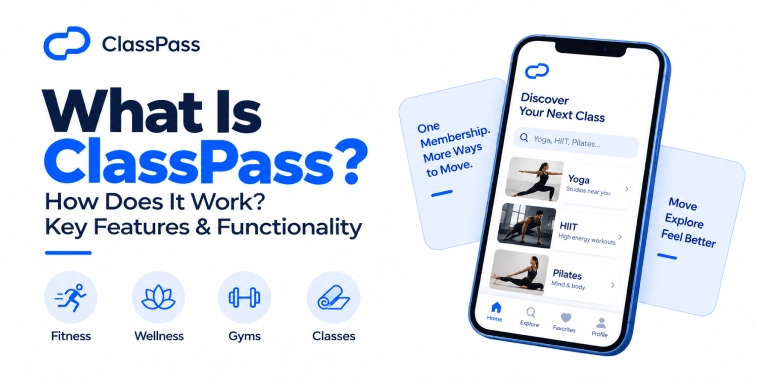
ClassPass is a digital fitness and wellness booking platform that allows eligible users to discover and book participating fitness classes, studios, gyms, and wellness experiences through a membership-based service.
Instead of relying exclusively on a single fitness provider, users can explore participating options through one platform.
Depending on availability and location, the types of experiences offered through a platform such as ClassPass can include:
- Yoga
- Pilates
- Cycling
- Strength training
- Dance
- HIIT
- Boxing
- Gym access
- Wellness services
- Recovery experiences
- Other fitness and wellness activities
The actual availability of classes and services depends on participating businesses, membership terms, location, schedule, and other applicable conditions.
From a business perspective, the ClassPass model demonstrates how technology can connect customers, fitness providers, wellness businesses, schedules, reservations, memberships, and payments within a unified digital ecosystem.
How Does ClassPass Work?
The basic concept is straightforward.
A user creates an account, chooses an appropriate membership or access option, searches for available fitness or wellness experiences, and books an eligible class or service.
Step 1: User Registration
A customer creates an account and provides the information required to use the service.
Step 2: Membership or Access
The customer selects an available membership or access option according to the platform’s current terms and location.
Step 3: Discover Activities
Users can search for classes, gyms, studios, and wellness experiences.
Step 4: Check Availability
The platform displays eligible sessions and available booking slots.
Step 5: Make a Reservation
The customer selects a suitable time and confirms the booking.
Step 6: Attend the Experience
The customer visits the participating provider at the scheduled time.
Step 7: Manage Future Bookings
Users can review upcoming reservations and manage eligible bookings according to the platform’s policies.
This model makes the booking experience more centralized and can reduce the need to communicate with individual providers separately.
Why Is the ClassPass Model Popular?
The fitness industry has traditionally included individual gym memberships, studio memberships, class packages, and standalone wellness services.
A multi-provider booking platform introduces a different approach.
Flexibility
Users can discover different activities rather than being limited to one location.
Variety
A digital marketplace can bring different types of workouts and wellness experiences together.
Convenience
Search, scheduling, and booking can be handled through one application.
Discovery
Customers can discover studios or activities they may not have considered previously.
Digital Booking
The platform makes it possible to manage reservations digitally instead of relying primarily on phone calls or manual booking.
Key Features of ClassPass-Style Platforms
A successful fitness and wellness booking platform requires more than a calendar.
It needs features that support the entire customer journey.
User Registration and Profiles
User accounts provide a central place to manage fitness and wellness activity.
Profile functionality can include:
- Personal information
- Membership details
- Preferences
- Upcoming bookings
- Booking history
- Saved providers
- Notifications
- Account settings
A well-designed profile makes it easier for users to manage their activity from one place.
Fitness and Wellness Discovery
Discovery is one of the most important features of a multi-provider platform.
Users can browse different categories and explore participating providers.
Possible discovery categories include:
- Yoga
- Pilates
- Gym
- Cycling
- Dance
- Martial arts
- Strength training
- Meditation
- Recovery
- Wellness services
Categories can be customized based on the target market and available providers.
Search and Filters
A strong search experience helps users find relevant classes quickly.
Filters may include:
- Activity type
- Location
- Date
- Time
- Distance
- Provider
- Difficulty level
- Availability
- Price or membership eligibility
Search and filtering become particularly important as the number of participating businesses increases.
Class Schedules
Fitness businesses operate according to different schedules.
A platform should present class information clearly, including:
- Class name
- Provider
- Date
- Start time
- Duration
- Location
- Instructor information where available
- Availability
- Booking requirements
Clear scheduling reduces confusion and makes the reservation process easier.
Booking and Reservation Management
Booking functionality is at the center of a ClassPass-style platform.
Users can select an eligible class and reserve a place.
The system can manage:
- Booking confirmation
- Reservation details
- Upcoming classes
- Cancellations
- Rescheduling where supported
- Booking history
Rules around cancellations, late cancellations, credits, or membership access should be communicated clearly to users.
Calendar Integration
Calendar functionality can help users keep track of their fitness commitments.
Depending on the platform’s implementation, users may be able to add eligible reservations to their personal calendars.
This can reduce missed appointments and make fitness planning easier.
Location and Map Features
Location technology can help customers discover nearby fitness studios and wellness providers.
A platform can display:
- Provider location
- Distance
- Directions
- Service area
- Nearby activities
Location-based discovery is particularly useful for customers who want a class before or after work or within a specific neighborhood.
Ratings and Reviews
Reviews can help users understand the experiences offered by participating providers.
Customers may evaluate factors such as:
- Class experience
- Instructor
- Facility
- Atmosphere
- Service quality
Review systems should use appropriate moderation and reporting mechanisms to maintain useful information.
Favorites and Saved Providers
Users may want to save studios, classes, or activities they frequently use.
A favorites feature can make repeat booking faster.
Instead of searching from the beginning each time, customers can access saved options directly.
Notifications and Reminders
Notifications help customers stay informed about their bookings.
Examples include:
- Booking confirmation
- Upcoming class reminders
- Schedule changes
- Cancellation notifications
- Membership information
- Other relevant account updates
Users should have suitable controls for non-essential promotional notifications.
AI Features for Fitness and Wellness Booking
AI can add value to fitness and wellness platforms when it is used to solve practical customer and operational problems.
AI-Powered Recommendations
AI can analyze permitted user activity and preferences to suggest relevant classes or experiences.
For example, a customer who frequently searches for Pilates may receive recommendations for similar classes.
Recommendations should be designed with appropriate privacy controls and transparency.
Intelligent Search
Traditional search often depends on exact keywords.
AI-assisted search can help interpret natural-language requests.
For example, a user might search for:
“A beginner workout near me after work.”
An intelligent search system could use factors such as activity type, experience level, location, and time to identify relevant available options.
The final results should still reflect actual provider availability.
Personalized Class Discovery
AI can help personalize the home screen according to a customer’s interests and previous activity.
Possible recommendations can include:
- Frequently booked activities
- Similar classes
- New providers
- Classes at preferred times
- Nearby experiences
Personalization should enhance discovery without making the interface difficult to navigate.
AI Customer Support
An AI assistant can help answer common questions about:
- Booking procedures
- Membership information
- Class schedules
- Cancellation policies
- Account settings
- Platform navigation
When an issue requires human intervention, the conversation can be transferred to customer support.
Demand Forecasting
AI can also provide value to fitness businesses.
Historical booking information can help providers understand patterns in demand.
Businesses may use forecasting to support:
- Class scheduling
- Instructor planning
- Capacity management
- Promotional planning
- Resource allocation
Forecasting is decision support, not a guarantee of future attendance.
ClassPass for Fitness Businesses
A multi-provider platform is not only about customers.
Fitness studios, gyms, and wellness providers can also benefit from digital marketplace exposure.
A provider-facing system can include:
Provider Profile
Businesses can showcase:
- Business name
- Location
- Services
- Class types
- Schedule
- Images
- Policies
Schedule Management
Providers can manage available classes and time slots.
Booking Management
Businesses can view reservations and manage eligible bookings.
Availability Management
Providers can update available capacity according to their operational needs.
Performance Analytics
A provider dashboard can show information such as:
- Booking volume
- Popular classes
- Attendance patterns
- Revenue-related information
- Customer activity
The exact analytics should depend on the business model and data available.
Admin Dashboard
A centralized administration panel is essential for managing a multi-provider platform.
Administrators may need tools for:
- User management
- Provider management
- Category management
- Class management
- Booking management
- Membership management
- Payment management
- Reviews
- Promotions
- Notifications
- Reports
- Analytics
A well-organized admin dashboard can help platform operators monitor the entire ecosystem.
Membership and Credit-Based Models
Fitness booking platforms can use different access structures.
A business may choose a membership model where customers receive access to eligible classes or services according to their plan.
Another model can use credits, packages, subscriptions, or a combination of options.
Potential membership features include:
- Plan selection
- Membership renewal
- Payment management
- Usage tracking
- Upgrade options
- Cancellation management
- Membership history
The specific rules should be clearly communicated before customers purchase a plan.
Business Model and Revenue Opportunities
A fitness and wellness marketplace can generate revenue through several approaches.
Membership Revenue
Recurring memberships can provide predictable revenue when customers continue their subscriptions.
Provider Partnerships
Fitness businesses can participate in the platform under agreed commercial terms.
Booking-Related Revenue
The platform may generate revenue through agreed booking or transaction arrangements.
Premium Memberships
Businesses can offer higher-tier plans with additional benefits.
Promotional Opportunities
Providers or brands may pay for appropriate promotional exposure.
The right revenue model depends on customer demand, provider economics, market competition, and operating costs.
Technology and Third-Party Integrations
Technology is the foundation of a modern fitness booking platform.
Payment Integration
Payment gateways can process membership and eligible transaction payments.
Maps and Location APIs
Location services support:
- Provider discovery
- Distance calculations
- Directions
- Nearby searches
Calendar Services
Calendar integration can help users manage scheduled activities.
Push Notifications
Push notifications can deliver booking and account updates.
Email and SMS
Communication services can support transactional messages and account verification.
Analytics Platforms
Analytics tools can help businesses understand:
- User engagement
- Booking activity
- Retention
- Provider performance
- Conversion behavior
AI Services
AI technology can support search, recommendations, support, forecasting, and personalization.
Third-party services should be evaluated for reliability, security, scalability, pricing, and privacy requirements.
Security and Privacy
Fitness and wellness platforms can process personal account information, payment details, booking information, location data, and other user-related information.
Security should therefore be designed into the platform from the beginning.
Important considerations include:
- Secure authentication
- Strong password and account protection
- Role-based access
- Encryption
- Secure payment processing
- Data minimization
- Privacy controls
- Monitoring
- Backup and recovery procedures
Businesses should also comply with applicable privacy and data-protection requirements in the markets where they operate.
If a platform introduces features involving sensitive health or wellness information, additional legal and privacy considerations may apply.
Conclusion
ClassPass represents a digital approach to fitness and wellness discovery that connects users with participating providers through a centralized booking experience.
Instead of relying solely on individual gym or studio memberships, users can explore eligible classes and wellness experiences through a unified platform.
The core experience depends on several connected capabilities, including user accounts, search, filters, provider discovery, schedules, bookings, memberships, payments, notifications, location services, reviews, and administrative management.
AI can add another layer of functionality through personalized recommendations, intelligent search, customer support, demand forecasting, and smarter discovery.
For businesses, a ClassPass-style platform can create a multi-provider ecosystem where customers discover fitness and wellness experiences while providers gain digital tools for managing schedules and bookings.
In 2026, the opportunity extends beyond simply creating another booking application. A modern platform can combine personalization, AI, marketplace functionality, secure payments, location technology, analytics, and an intuitive user experience to make fitness and wellness discovery more convenient.
The most effective approach is to build around real customer and provider needs, maintain transparent booking and membership policies, protect user information, and create a platform that can scale as the fitness and wellness ecosystem grows.
Frequently Asked Questions (FAQs)
1. What is ClassPass?
ClassPass is a fitness and wellness booking platform that allows eligible users to discover and book participating fitness classes, gyms, studios, and wellness experiences through a membership-based service.
2. How does ClassPass work?
Users create an account, select an available membership or access option, discover eligible classes or wellness experiences, check schedules and availability, and make bookings through the platform.
3. What features should a ClassPass-style app include?
Important features can include user registration, provider discovery, search and filters, class schedules, booking management, memberships, payments, notifications, location services, reviews, favorites, analytics, and an admin dashboard.
4. Can AI be integrated into a fitness booking platform?
Yes. AI can support personalized recommendations, intelligent search, customer support, demand forecasting, and other practical functions. AI should be implemented with appropriate privacy and data-governance considerations.
5. Can businesses build a fitness and wellness booking platform like ClassPass?
Yes. Businesses can develop a customized fitness and wellness marketplace with customer, provider, and administration interfaces. The platform can be adapted to the target market, provider network, membership model, service categories, and required integrations.

Parth Kulkarni
Managing Director
Parth Kulkarni is the Managing Director with strong expertise in IT and on-demand app solutions, focused on empowering startups and enterprises with scalable digital products. His strategic leadership and business insight drive innovation, ensuring consistent client success and long-term growth.