

Introduction
Managing household cleaning alongside work, family responsibilities, and everyday activities can be challenging. Many people prefer professional cleaning services but do not always have time to search for cleaners, compare service options, arrange appointments, and coordinate payments. Traditional booking methods can also make it difficult to manage recurring appointments or communicate changes.
On-demand home cleaning platforms simplify this process by connecting customers with professional cleaning services through websites and mobile applications. Customers can explore available services, enter property details, select a suitable appointment, and manage bookings digitally.
Batmaid is an example of a technology-enabled cleaning company that uses online booking to make professional cleaning services more accessible. Founded in Lausanne, Switzerland, in 2015, the company provides home cleaning, end-of-tenancy cleaning, and business cleaning in its operating markets. Its platform allows customers to arrange and manage cleaning appointments online. Batmaid also states that its cleaning professionals are employed and insured by the company in its Swiss operations.
The growth of digital home services creates opportunities for entrepreneurs interested in developing similar platforms. A Batmaid-inspired cleaning app can help customers book cleaning appointments while giving businesses tools to manage schedules, service requests, and customer relationships.
This guide explains what Batmaid is, the main features of an on-demand cleaning platform, its potential business models, and the key steps involved in developing a home cleaning application.
What Is Batmaid?
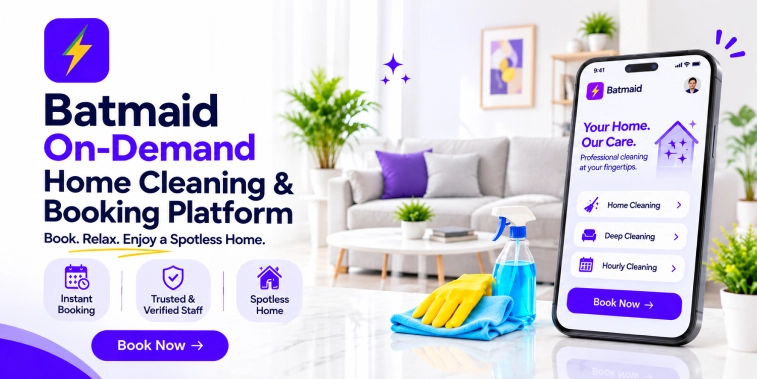
Batmaid is a digital home cleaning company that connects customers with professional cleaning services through an online platform and mobile application. It focuses on making cleaning appointments easier to arrange and manage.
Customers can select an available service, provide their property details, choose a preferred schedule, and manage reservations through the platform. Depending on the market and service, customers may also arrange regular cleaning appointments or request specialized cleaning.
The main service categories include:
- Home cleaning: Cleaning for houses and apartments, including regular and one-time appointments.
- End-of-tenancy cleaning: Cleaning for properties being prepared for a move, rental handover, or change of occupancy.
- Business cleaning: Cleaning for offices, shops, coworking spaces, and other commercial premises.
Service availability and booking conditions may vary by location. One important aspect of Batmaid’s business model is its approach to employing cleaning professionals. The company describes its cleaners as employed, declared, and insured in its Swiss operations. This differs from a basic marketplace where independent service providers create profiles and receive customer requests.
For entrepreneurs, a batmaid clone app refers to an independently developed platform inspired by the on-demand cleaning concept. A new business can choose an employed cleaning workforce, a marketplace of independent providers, or a suitable hybrid model. Its branding, policies, service categories, and operations should be developed independently rather than presented as an official Batmaid product.
Key Features of a Batmaid Clone App
A successful home cleaning platform needs features that simplify service booking and support the business behind each appointment. Customers need convenient tools for selecting services and managing reservations, while cleaners and administrators require scheduling and operational functionality.
1. Customer Registration and Profile Management
Customer registration allows users to create accounts and access cleaning services through a central dashboard. The application can support email registration, mobile number verification, and secure login options.
Customers can save their contact details, property addresses, booking history, preferred payment methods, and cleaning instructions. They can also update their information whenever their requirements change.
A profile management system makes future bookings more convenient because customers do not need to enter the same details repeatedly. It also gives users a central place to review upcoming appointments and previous services.
2. Cleaning Service Categories
A service category feature helps customers understand the cleaning options available through the platform.
A cleaning application can include categories such as:
- Regular home cleaning
- One-time home cleaning
- Deep cleaning
- End-of-tenancy cleaning
- Apartment cleaning
- Office cleaning
- Kitchen and bathroom cleaning
- Additional cleaning tasks
Each category can contain a service description, estimated duration, pricing information, and a list of included tasks.
Clear descriptions help customers select the appropriate service and understand what is included before confirming an appointment.
3. Online Booking and Scheduling
Online booking is one of the most important features of an on-demand cleaning application. It allows customers to arrange appointments without relying entirely on manual phone coordination.
Users can select a cleaning service, enter property details, choose a date, and review available appointment slots.
The scheduling system should consider cleaner availability, working hours, appointment duration, and service locations. Once a booking is accepted, the customer can receive a confirmation with the relevant appointment details.
For recurring services, the platform can support weekly, fortnightly, or monthly schedules where the business offers these options.
4. Location-Based Service Availability
Location-based functionality helps determine whether cleaning services are available in a customer’s area.
Customers can enter a postcode, address, or location details during booking. The platform can then display available services and appointment options for that region.
Administrators can define service coverage areas and manage expansion into new locations. Cleaning professionals can also be assigned according to their working areas and schedules.
This feature helps businesses manage service availability and prevents customers from requesting appointments in unsupported locations.
5. Cleaner Profiles and Management
Cleaner profiles provide information about the professionals responsible for delivering cleaning services.
Depending on the operating model, profiles may include names, experience, training information, service areas, availability, and relevant qualifications.
For a company-managed cleaning operation, the profile system can connect with employee records and internal scheduling tools. A marketplace model may instead support provider registration, profile creation, and eligibility checks.
The platform should communicate its employment and verification policies clearly. Any qualifications, insurance details, or background checks displayed should reflect the business’s actual procedures.
6. Cleaning Instructions and Customization
Every property has different cleaning requirements. A cleaning instruction feature allows customers to explain their priorities before an appointment.
Customers may provide details about rooms, surfaces, preferred cleaning tasks, and optional extras. They can also include notes about access arrangements or other relevant requirements.
The application can provide predefined checklists to make task selection easier. For example, a standard home cleaning checklist may cover bedrooms, living areas, kitchens, bathrooms, and floors.
Additional tasks can be listed separately so customers understand whether extra time or charges apply.
7. Recurring Booking Management
Recurring booking functionality helps customers arrange cleaning services at regular intervals.
Users can select a preferred frequency and manage future appointments from their accounts. The platform can create upcoming bookings according to the selected schedule.
Customers may also need options to reschedule, pause, or cancel recurring appointments according to the business’s terms.
For cleaning businesses, recurring bookings can improve schedule planning and help estimate future service demand.
8. Secure Online Payments and Invoices
A payment feature allows customers to pay for cleaning services through supported digital payment methods.
The application can display the service price, additional charges, applicable taxes, and payment status before confirming an appointment.
Customers can access digital receipts and invoices through their accounts. Administrators can review transactions, monitor outstanding payments, and manage eligible refunds according to company policies.
Transparent pricing and secure payment processing are important for building customer confidence.
9. Ratings and Customer Feedback
A rating and review feature allows customers to share feedback after a completed cleaning appointment.
Users can rate their experience and comment on service quality, punctuality, communication, and overall satisfaction.
Administrators can review feedback to identify recurring service issues and monitor customer satisfaction.
The platform should establish clear review guidelines and a process for handling inappropriate or disputed feedback. Genuine customer feedback can help future users make informed decisions and support continuous service improvement.
10. Notifications and Reminders
Notifications keep customers and cleaning professionals informed about important booking activities.
The application can send alerts for booking confirmations, appointment reminders, schedule changes, cleaner assignments, payment confirmations, cancellations, and feedback requests.
Notifications can be delivered through in-app alerts, email, or push notifications, depending on the platform’s integrations.
Users should be able to manage their notification preferences so they receive relevant updates without unnecessary interruptions.
11. Cleaner Dashboard
A cleaner dashboard provides access to the information professionals need to manage assigned appointments.
It can include daily schedules, job details, customer instructions, service locations, working hours, and appointment status.
Cleaning professionals can review upcoming work and communicate relevant updates to the operations team.
For a company-managed workforce, the dashboard can also connect with employee scheduling and attendance systems.
12. Admin Dashboard
The admin dashboard gives the business owner and authorised staff control over platform operations.
Administrators can manage customer accounts, cleaner records, service categories, booking requests, payments, schedules, and customer feedback.
The dashboard can also provide reports about completed appointments, cancellations, revenue, service demand, and workforce availability.
Role-based permissions help ensure that staff members only access the administrative tools needed for their responsibilities.
Business Model of a Batmaid Clone App
A cleaning application needs a clear revenue strategy that supports service delivery and operating costs. The right model depends on whether the business employs cleaners, operates a marketplace, or combines both structures.
1. Service-Based Revenue Model
In a company-managed model, the business charges customers for cleaning services delivered by its employed workforce.
Prices can depend on appointment duration, property size, service type, location, and optional extras.
The revenue helps cover employee wages, insurance, operational expenses, technology, customer support, and other costs. The remaining amount contributes to business profit.
2. Recurring Cleaning Packages
A cleaning business can offer recurring service packages to customers who need regular appointments.
Customers may choose weekly, fortnightly, or monthly cleaning plans. Pricing can depend on the selected schedule, service duration, and property requirements.
Recurring packages can encourage customer retention and help businesses plan future demand. Renewal, rescheduling, and cancellation conditions should be communicated clearly.
3. One-Time Booking Revenue
One-time bookings allow customers to purchase individual cleaning appointments without choosing a recurring plan.
This model can attract people who need occasional cleaning, seasonal assistance, or support before or after moving.
Businesses can offer different service durations and optional extras to match individual requirements.
4. Additional Cleaning Services
A business can generate additional revenue by offering optional tasks alongside standard cleaning appointments.
Examples may include oven cleaning, refrigerator cleaning, cupboard cleaning, ironing, or other services supported by the business.
Additional services should have clear descriptions, prices, and time requirements so customers understand the full booking cost.
5. Corporate and Office Cleaning Contracts
A cleaning platform can serve business customers as well as households.
Offices, retail stores, coworking spaces, and other commercial premises may require scheduled cleaning arrangements.
Businesses can offer customised service plans based on premises size, cleaning frequency, operating hours, and contract requirements. Corporate agreements can provide a more predictable source of revenue.
6. Marketplace Service Fees
If the application connects independent cleaning providers with customers, it may charge providers a subscription fee or a service fee for eligible bookings.
This model differs from a company-managed operation, where the business directly organises cleaning services through its employees.
The platform should explain its role, provider terms, payment responsibilities, and service standards clearly. Its employment and business structure should also comply with applicable local regulations.
How to Develop a Batmaid Clone App
Developing an on-demand cleaning application requires planning across business operations, technology, service management, and customer experience. A structured development process helps businesses prioritise essential functionality.
1. Conduct Market Research
Identify the target customers, cleaning requirements, and local market opportunities.
Research existing cleaning services, competitor booking processes, customer expectations, and common problems with scheduling or service quality.
Decide whether the platform will focus on residential cleaning, commercial cleaning, or both. Define the service locations and the type of cleaning workforce the business intends to use.
2. Select the Business Model
Choose whether the platform will operate with employed cleaners, independent service providers, or a suitable hybrid structure.
This decision affects provider onboarding, scheduling, payments, insurance, customer support, and legal responsibilities.
The business model should be established before development because it influences application features and operational workflows.
3. Define the Essential Features
Prepare separate feature requirements for customers, cleaners, and administrators.
Prioritise booking, scheduling, service categories, payment management, cleaning instructions, notifications, and dashboards.
Start with the functionality needed to deliver the core service. Advanced features can be introduced after the platform has been tested with users.
4. Design the User Experience
Create an interface that helps customers select services, enter property details, review prices, and confirm appointments.
The cleaner interface should focus on schedules and job information, while the administrator interface should support business operations.
The design should work consistently across supported devices and provide clear navigation and straightforward booking steps.
5. Choose the Development Approach
Businesses can consider a ready-made cleaning app solution or a customised development approach.
A ready-made solution may provide existing booking and management functionality, reducing the initial development effort. Custom development offers greater control over specialised workflows, integrations, and design.
The selected approach should support the business model, essential features, and future growth requirements.
6. Test and Launch the Platform
Before launch, test the customer booking journey, cleaner scheduling tools, admin dashboard, payment process, and notification system.
Check performance across supported devices and resolve important usability and security issues.
A new marketplace or cleaning service can begin in a manageable service area, collect customer feedback, and improve its operations before expanding into additional locations.
Cost Factors in Batmaid Clone App Development
The cost of developing an on-demand cleaning application depends on its features, platform requirements, integrations, design, and operating model. There is no single fixed price for every project.
The following factors can influence the overall budget:
Feature complexity: A basic booking platform requires less development effort than a solution with recurring appointments, employee management, advanced scheduling, and reporting.
Application platforms: Developing a website, customer mobile app, cleaner app, and admin dashboard can increase the project scope.
UI/UX design: Custom interfaces and separate user journeys require additional design and testing work.
Third-party integrations: Payment gateways, maps, notifications, and analytics may involve setup fees or ongoing usage costs.
Workforce management: A company-managed cleaning model may require additional tools for employee records, assignments, attendance, and scheduling.
Security and maintenance: Account protection, data handling, software updates, bug fixes, and technical support should be included in the long-term budget.
Development approach: Ready-made solutions and customised applications can differ in initial cost, flexibility, and maintenance requirements.
Businesses should identify their essential launch features and operating model before requesting a development estimate. A clearly defined project scope makes it easier to prioritise spending and avoid unnecessary functionality.
Conclusion
Batmaid demonstrates how digital technology can simplify the process of booking and managing professional home cleaning services. Its platform combines online scheduling, customer account management, and cleaning operations to make appointments easier to organise.
A Batmaid clone app can follow a similar on-demand cleaning concept while using independent branding, service options, workforce arrangements, and revenue strategies. Features such as online booking, location-based availability, recurring appointments, digital payments, cleaner dashboards, and admin management can provide a strong foundation.
For entrepreneurs, the opportunity is to build a cleaning platform that makes service booking convenient while supporting reliable operations and responsible treatment of cleaning professionals. Market research, a clearly defined business model, transparent pricing, and continuous improvements can help establish a sustainable home cleaning business.
Frequently Asked Questions (FAQs)
1. What Is a Batmaid Clone App?
A Batmaid clone app is an independently developed on-demand home cleaning platform inspired by the concept of booking professional cleaning services online. It can include customer registration, service selection, scheduling, payments, cleaner management, notifications, and an admin dashboard.
2. What Are the Main Features of a Batmaid Clone App?
The main features include customer profiles, cleaning service categories, online booking, location-based availability, cleaner profiles, cleaning instructions, recurring appointments, online payments, ratings, notifications, cleaner dashboards, and admin management.
3. How Does an On-Demand Home Cleaning App Make Money?
A home cleaning application can generate revenue through one-time cleaning bookings, recurring service packages, additional cleaning services, corporate contracts, and service fees where a marketplace model is used.
4. How Long Does It Take to Develop a Batmaid Clone App?
The development timeline depends on the number of features, application platforms, design requirements, integrations, and selected development approach. A basic booking application generally requires less development effort than a platform with advanced scheduling, workforce management, payments, and reporting.
5. Can a Batmaid Clone App Support Residential and Commercial Cleaning?
Yes. An independently developed cleaning platform can support both residential and commercial services. It can include separate service categories, booking workflows, pricing structures, schedules, and account features for households and business customers.

Parth Kulkarni
Managing Director
Parth Kulkarni is the Managing Director with strong expertise in IT and on-demand app solutions, focused on empowering startups and enterprises with scalable digital products. His strategic leadership and business insight drive innovation, ensuring consistent client success and long-term growth.