


Introduction
The ride-hailing industry has moved beyond traditional taxi booking. Customers now expect convenient booking, transparent trip information, flexible pricing options, real-time tracking, digital payments, and reliable communication with drivers. At the same time, entrepreneurs and transportation companies are looking for technology solutions that allow them to launch competitive ride-hailing platforms without building every component from the ground up.
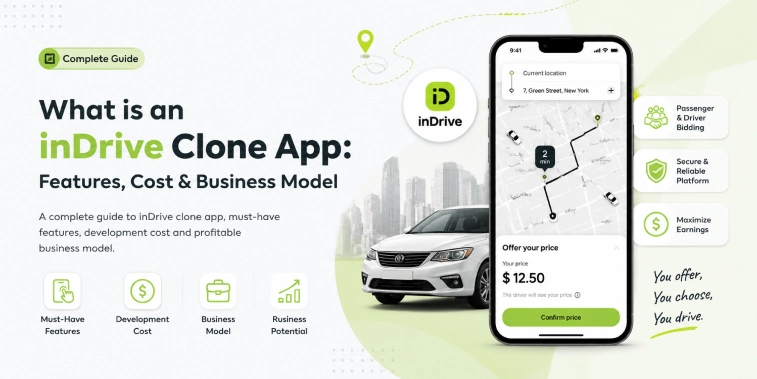
An inDrive Clone App provides a customizable foundation for businesses that want to launch their own ride-hailing platform inspired by the inDrive business model. The platform can connect passengers and drivers through a digital marketplace while allowing businesses to configure branding, service areas, vehicle categories, pricing rules, commissions, and operational features.
One important characteristic of the inDrive-style model is the flexibility around trip pricing. Depending on the business model and market, passengers may be able to propose a fare, while drivers can accept the request or respond according to the platform’s pricing mechanism. This creates a different experience from ride-hailing systems that rely entirely on automatically calculated fares.
In 2026, ride-hailing platforms can also benefit from technologies such as AI-assisted matching, location intelligence, digital payments, real-time tracking, automated notifications, and analytics. However, technology alone is not enough. A successful platform also needs a strong driver network, reliable customer support, appropriate pricing, and a smooth booking experience.
This guide explains what an inDrive Clone App is, how it works, which features it needs, how businesses can monetize it, and what factors influence development cost.
What Is an inDrive Clone App?
An inDrive Clone App is a customizable ride-hailing application that allows entrepreneurs, startups, transportation companies, and mobility businesses to launch their own branded platform for connecting passengers with drivers.
Instead of developing a ride-hailing platform completely from scratch, businesses can start with a pre-built solution and customize it according to their market requirements.
The platform can include passenger booking, driver management, trip requests, fare negotiation or flexible pricing, GPS tracking, payments, notifications, ratings, support, and administrative controls.
A complete inDrive-style platform generally includes several connected components.
Passenger App
The Passenger App allows users to register, enter pickup and destination locations, request rides, review pricing, select suitable drivers, track trips, make payments, and rate completed rides.
Driver App
The Driver App allows drivers to register, submit verification information, manage availability, receive ride requests, respond to trip offers, navigate to passengers, complete rides, and monitor earnings.
Admin Dashboard
The Admin Dashboard provides centralized control over customers, drivers, trips, pricing, commissions, payments, service areas, complaints, promotions, and analytics.
Support & Operations System
A ride-hailing platform can also include customer support and operational tools for handling cancellations, disputes, driver verification, payment issues, and other service-related requests.
Together, these components create a connected marketplace between passengers and transportation providers.
How Does an inDrive Clone App Work?
An inDrive-style ride-hailing platform typically follows a simple digital workflow.
- The passenger enters pickup and destination locations
- The passenger provides trip requirements
- The passenger proposes or reviews the available fare mechanism
- Drivers receive the trip request
- Drivers respond according to the platform’s pricing and acceptance model
- The passenger selects a suitable driver
- The driver travels to the pickup location
- The passenger tracks the trip
- Driver completes the ride
- Payment and trip completion are recorded
- The passenger can rate the driver
The exact workflow can be customized depending on the business model and local transportation requirements.
1. Passenger Registration
Users create an account using the supported registration method. They can manage personal information, saved locations, payment preferences, and ride history.
2. Enter Trip Details
The passenger enters the pickup and destination locations. The platform can use GPS and maps to identify locations and estimate the journey.
3. Request a Ride
The passenger submits a ride request with the required trip details. Depending on the pricing model, the passenger may propose a fare or review the platform’s applicable fare mechanism.
4. Driver Responses
Available drivers can receive the request and respond according to the platform’s rules. Drivers may accept the proposed fare or provide an alternative offer where negotiation is supported.
5. Passenger Selects a Driver
The passenger can review relevant driver information and choose an appropriate driver according to the available options.
6. Pickup & Trip Tracking
The selected driver travels to the pickup location. GPS tracking can provide visibility into the driver’s location and trip progress.
7. Ride Completion
The driver reaches the destination and completes the trip through the Driver App. The platform records the completed journey.
8. Payment & Rating
The passenger completes payment through the supported payment method where applicable and can provide a rating or review.
This workflow creates a marketplace where passengers can request transportation while drivers can choose suitable trip opportunities.
Types of Services an inDrive-Style Platform Can Support
A business can customize its platform according to local demand and transportation requirements.
Taxi & Car Booking
Customers can book standard car transportation for daily travel, airport trips, business travel, and other journeys.
Bike & Two-Wheeler Rides
Where legally and operationally appropriate, businesses can offer two-wheeler transportation for customers seeking another mobility option.
Auto-Rickshaw Services
In markets where auto-rickshaws are common, businesses can include auto transportation as a separate vehicle category.
Airport Transfers
The platform can support scheduled or on-demand airport transportation with dedicated pickup and destination workflows.
Outstation Trips
Businesses can offer longer-distance transportation between cities or regions where permitted.
Corporate Transportation
Companies can use the platform for employee transportation, business travel, and recurring mobility requirements.
The exact service categories should depend on local regulations, available drivers, market demand, and the business’s operational capabilities.
Must-Have Features of an inDrive Clone App
A competitive ride-hailing platform needs features that make booking convenient for passengers while giving drivers efficient tools to manage trips.
Passenger App Features
Easy Registration
Passengers can create accounts and manage their profile information.
Location & Destination Selection
GPS and map integration can help users select pickup and destination locations.
Flexible Fare Mechanism
The platform can support a fare model where passengers propose a price, review applicable offers, or interact with driver responses according to the business rules.
Driver Selection
Passengers can review available driver information and select a suitable option.
Real-Time Tracking
GPS tracking allows passengers to monitor driver location and trip progress.
Multiple Payment Options
The platform can support digital payment methods configured for the target market.
Ride History
Passengers can view completed and previous trips.
Notifications
Push notifications can provide updates about driver acceptance, arrival, trip progress, payment, and completion.
Ratings & Reviews
Passengers can rate drivers after completed trips and provide feedback.
Customer Support
Support functionality can help passengers resolve booking, payment, cancellation, or trip-related issues.
Driver App Features
The Driver App should help transportation partners manage their entire trip lifecycle.
Driver Registration & Verification
Drivers can register and submit required documentation for approval.
Availability Management
Drivers can switch their availability on or off and receive relevant ride requests.
Ride Request Management
Drivers can review trip details and accept or respond to requests according to the platform’s pricing model.
Fare Response
Where fare negotiation is supported, drivers can submit an alternative offer based on the platform’s rules.
Navigation
GPS navigation can help drivers reach passengers and destinations.
Earnings Management
Drivers can view completed trips, commissions, earnings, incentives, and payout information.
Trip History
Drivers can review their completed rides and relevant transaction information.
Admin Dashboard Features
The Admin Dashboard gives business owners centralized control over the ride-hailing ecosystem.
Driver Management
Administrators can review driver registrations, verification status, availability, performance, and account activity.
Passenger Management
The platform can manage customer accounts, ride history, support requests, and account status.
Ride Management
Administrators can monitor active, completed, cancelled, and disputed rides.
Pricing & Commission Management
Businesses can configure applicable fare rules, commissions, service fees, and other pricing settings.
Service Area Management
Administrators can define operating locations and manage expansion into new areas.
Payment Management
The dashboard can monitor customer payments, driver payouts, commissions, refunds, and transaction records.
Analytics
Reports can provide insights into bookings, revenue, active users, driver activity, cancellation rates, popular routes, and service demand.
Benefits of Launching an inDrive Clone App
Flexible Ride-Hailing Model
A flexible fare mechanism can provide an alternative to fixed-price ride booking and allow businesses to differentiate their platform.
Better Passenger Choice
Passengers can potentially compare driver responses and select an option that suits their requirements.
Driver Flexibility
Drivers can evaluate available ride requests and choose trips according to their preferences and platform rules.
Multiple Revenue Opportunities
Businesses can generate revenue through commissions, service fees, subscriptions, corporate accounts, and other marketplace models.
Scalable Marketplace
The platform can expand by adding more drivers, passengers, vehicle categories, and geographic areas.
Digital Operations
Bookings, payments, driver management, support, and analytics can be handled through a centralized platform rather than relying on manual processes.
inDrive Clone App Business Model & Revenue Streams
An inDrive-style ride-hailing platform can use multiple revenue streams.
Commission on Completed Rides
The platform can charge drivers or apply a commission to completed rides according to the business model.
Service Fees
A platform can charge applicable service fees on selected bookings.
Driver Subscription Plans
Businesses can offer optional subscription plans that provide selected benefits to drivers in exchange for a recurring fee.
Corporate Accounts
Companies can use the platform for employee transportation and business travel, creating opportunities for recurring B2B revenue.
Premium Services
Businesses can introduce premium vehicle categories, airport transfers, scheduled rides, or other specialized services where demand exists.
Promotional Opportunities
The platform can offer promotional placements or partnerships to relevant businesses.
A diversified revenue strategy can help reduce dependence on a single income source.
inDrive Clone App Development Cost
The cost to develop an inDrive Clone App varies considerably depending on the platform’s scope and customization requirements.
There is no single fixed price that applies to every project.
Several factors influence development cost.
Platform Components
Building a passenger app, driver app, admin dashboard, backend system, and additional business panels requires more development work than creating a single application.
Features & Customization
Basic ride booking requires less development than advanced functionality such as fare negotiation, scheduled rides, multiple vehicle categories, corporate accounts, advanced analytics, and automated operations.
UI/UX Design
A highly customized interface with unique branding and user journeys can require more design and development effort.
Technology Integrations
Maps, payment gateways, notifications, authentication, analytics, communication systems, and other integrations can influence the total project cost.
Geographic Scope
Launching in one market may require fewer operational configurations than supporting multiple countries, currencies, languages, and regulatory environments.
Platform Requirements
Developing native or cross-platform mobile applications, web dashboards, cloud infrastructure, security systems, and backend services can all affect the budget.
Development Team
The development team’s location, expertise, project complexity, and engagement model also influence the overall cost.
For this reason, businesses should define the required features, target market, platforms, integrations, and scalability requirements before requesting a development estimate.
inDrive Clone App Development Process
A structured development process can help businesses reduce unnecessary complexity and build around actual market requirements.
1. Market Research
Analyze target customers, competitors, transportation regulations, driver availability, pricing expectations, and service demand.
2. Business Model Planning
Define the fare mechanism, commission structure, service categories, target market, and revenue strategy.
3. Feature Planning
Identify the required passenger app, driver app, admin dashboard, payment systems, tracking tools, and other platform components.
4. UI/UX Design
Create intuitive interfaces that make ride requests, driver responses, trip management, and administration easy to understand.
5. Development
Develop the mobile applications, backend infrastructure, dashboards, databases, APIs, and required integrations.
6. Testing
Test booking, fare responses, driver matching, GPS tracking, payments, notifications, cancellations, and other critical workflows.
7. Launch & Optimization
Launch the platform in a controlled market, monitor performance, collect feedback, and improve the application based on real usage.
Future Trends for Ride-Hailing Platforms in 2026
AI-Assisted Driver Matching
AI and optimization technologies can help platforms identify suitable drivers based on location, availability, trip requirements, and operational conditions.
Smarter Route Optimization
Route optimization can help drivers identify efficient routes and support better transportation planning.
Personalized Ride Recommendations
Platforms can use relevant customer activity to provide more personalized service suggestions.
Digital & Contactless Payments
Digital payment options can make transactions more convenient while providing businesses with clearer transaction records.
Real-Time Demand Analytics
Analytics can help operators identify high-demand locations, peak periods, driver availability, and customer behavior.
Automated Customer Support
AI-assisted support can help handle common questions and direct more complex issues to human support teams.
EV & Sustainable Mobility
As electric mobility expands, ride-hailing platforms can add support for EV categories and sustainability-focused transportation options where appropriate.
These technologies can help ride-hailing businesses improve efficiency and create a more responsive customer experience.
Conclusion
An inDrive Clone App can provide entrepreneurs and transportation businesses with a customizable foundation for launching their own ride-hailing marketplace.
The platform can connect passengers and drivers through features such as flexible fare mechanisms, driver selection, GPS tracking, digital payments, notifications, ratings, and centralized administration.
The cost of development depends on factors such as platform components, features, customization, integrations, geographic scope, technology choices, and development resources. Therefore, businesses should determine their required functionality and target market before establishing a development budget.
A sustainable business model can combine ride commissions, service fees, driver subscriptions, corporate accounts, premium services, and promotional opportunities.
In 2026, AI-assisted matching, route optimization, real-time analytics, digital payments, automated support, and EV-focused mobility can further shape the ride-hailing industry.
The most important objective should be to build a reliable, easy-to-use, scalable, and market-specific transportation platform rather than simply copying another application. A well-planned inDrive-style solution can give businesses the flexibility to develop their own brand, pricing approach, service categories, and operational strategy.
Frequently Asked Questions (FAQs)
1. What is an inDrive Clone App?
An inDrive Clone App is a customizable ride-hailing platform that connects passengers with drivers and can support flexible fare mechanisms, trip booking, GPS tracking, payments, notifications, and driver management.
2. How much does it cost to develop an inDrive Clone App?
There is no universal fixed cost. The total cost depends on features, customization, platform components, integrations, geographic scope, technology requirements, and development resources.
3. What are the key features of an inDrive Clone App?
Important features include passenger registration, location selection, flexible fare mechanisms, driver responses, driver selection, GPS tracking, payments, notifications, ratings, driver management, and an admin dashboard.
4. How does an inDrive Clone App make money?
Revenue can come from ride commissions, service fees, driver subscription plans, corporate accounts, premium services, and promotional opportunities.
5. Why launch an inDrive-style ride-hailing platform in 2026?
The model can give businesses an opportunity to create a differentiated transportation marketplace with flexible pricing, digital booking, driver choice, real-time tracking, and modern technologies such as AI-assisted matching and analytics.

Parth Kulkarni
Managing Director
Parth Kulkarni is the Managing Director with strong expertise in IT and on-demand app solutions, focused on empowering startups and enterprises with scalable digital products. His strategic leadership and business insight drive innovation, ensuring consistent client success and long-term growth.
