

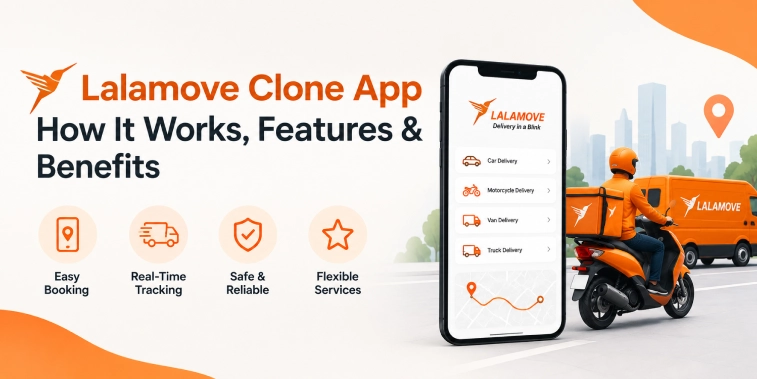
Introduction
The on-demand delivery industry has changed how businesses and customers move goods from one location to another. From small packages and documents to groceries, furniture, and commercial shipments, customers increasingly expect fast, convenient, and trackable delivery services.
A Lalamove Clone App provides a customizable foundation for entrepreneurs who want to build an on-demand delivery and logistics platform. Such a platform can connect customers with drivers, vehicle owners, delivery partners, and businesses through a single digital marketplace.
Instead of developing every component from scratch, entrepreneurs can use a customizable delivery application model and adapt it to their target market, vehicle types, delivery categories, pricing structure, and business requirements.
A modern Lalamove-style platform can include customer booking, driver management, real-time tracking, digital payments, delivery scheduling, notifications, route management, and administrative tools.
This guide explains how a Lalamove Clone App works, its essential features, benefits, business model, monetization methods, AI opportunities, and the key considerations involved in building a scalable delivery marketplace.
What Is a Lalamove Clone App?
A Lalamove Clone App is an on-demand delivery and logistics application designed around the core workflow of connecting customers with delivery partners and vehicles.
Depending on the business model, customers can use the platform to request different types of delivery services, such as:
- Local parcel delivery
- Document delivery
- Grocery delivery
- Food and retail delivery
- Furniture transportation
- Small business deliveries
- Commercial transportation
- Same-day delivery
- Scheduled delivery
The platform can support multiple vehicle categories, including motorcycles, cars, vans, pickup trucks, and larger commercial vehicles.
A customizable clone app does not need to copy another company’s branding, interface, or exact business model. Instead, businesses can select relevant features and create their own delivery platform based on local demand.
How Does a Lalamove Clone App Work?
A delivery marketplace generally connects four major participants:
- Customers
- Drivers or delivery partners
- Businesses or merchants
- Platform administrators
The basic workflow is straightforward.
Step 1: Customer Registration
Customers create an account using their basic information and provide delivery locations when placing an order.
The registration process should be quick and simple so users can start booking deliveries without unnecessary steps.
Step 2: Enter Pickup and Drop-Off Locations
The customer enters the pickup location and destination.
The application can use maps and location services to calculate distance and identify available delivery partners.
Step 3: Select a Vehicle or Delivery Type
Customers can choose a suitable vehicle according to the size, weight, or type of goods being transported.
For example:
- Motorcycle for small packages
- Car for lightweight deliveries
- Van for larger shipments
- Pickup truck for bulky goods
Step 4: Get a Delivery Estimate
The platform can calculate an estimated delivery cost based on factors such as:
- Distance
- Vehicle type
- Delivery urgency
- Time
- Location
- Additional services
The final pricing logic can be customized according to the business model.
Step 5: Confirm the Booking
After reviewing the estimated price and delivery details, the customer confirms the request.
The platform then searches for suitable delivery partners.
Step 6: Driver Assignment
Available drivers receive delivery requests through the driver application.
A driver can accept the request and receive pickup details.
Businesses can use automated matching based on location, vehicle type, availability, ratings, and other rules.
Step 7: Pickup
The driver reaches the pickup location and collects the package or goods.
The customer can receive status notifications during the process.
Step 8: Real-Time Tracking
Once the delivery begins, customers can track the driver’s location through the application.
GPS and mapping integrations can provide estimated arrival information.
Step 9: Delivery Completion
The driver delivers the goods to the destination and updates the order status.
The platform can support digital proof of delivery through confirmation codes, signatures, photos, or other methods depending on business requirements.
Step 10: Rating and Feedback
After delivery, customers can rate the service and provide feedback.
This information can help businesses monitor service quality and driver performance.
Essential Features of a Lalamove Clone App
A successful delivery platform requires features that make booking, fulfillment, tracking, and administration simple.
User Registration and Profiles
Customers should be able to create and manage their accounts.
Profile features may include:
- Name and contact details
- Saved addresses
- Order history
- Payment preferences
- Favorite locations
- Notifications
- Saved delivery information
Delivery Booking
The booking interface should allow users to enter pickup and destination details and select an appropriate delivery service.
A simple booking flow can reduce friction and improve conversions.
Vehicle Selection
Customers can select the vehicle that matches their delivery requirements.
The available categories can be customized according to the local market.
Fare Estimation
A pricing engine can calculate estimated delivery costs before customers confirm their bookings.
Businesses can configure pricing using distance, vehicle category, demand, delivery speed, and additional services.
Multiple Delivery Options
A flexible platform can support:
- Instant delivery
- Same-day delivery
- Scheduled delivery
- Multi-stop delivery
- Business delivery
- Bulk delivery
Real-Time Driver Tracking
GPS tracking allows customers to monitor delivery progress.
The map can show:
- Driver location
- Pickup location
- Destination
- Route
- Estimated arrival time
Secure Payments
The application can support multiple payment methods depending on the target market.
Examples include:
- Credit and debit cards
- Digital wallets
- Online banking
- Cash payments where appropriate
- Business accounts
- Stored payment methods
Order History
Customers can view previous delivery requests, invoices, payment details, and delivery information.
This is particularly useful for business customers who make frequent bookings.
Push Notifications
Notifications can keep users informed about:
- Booking confirmation
- Driver assignment
- Driver arrival
- Pickup completion
- Delivery progress
- Payment status
- Delivery completion
Ratings and Reviews
Customers can rate delivery partners after completing a booking.
Administrators can use ratings and reviews to monitor service quality.
Driver App Features
The driver application is an important part of an on-demand delivery ecosystem.
Driver Registration
Drivers can submit information such as:
- Personal details
- Vehicle information
- Driving credentials
- Required documents
- Bank or payment information
Administrators can review and approve driver profiles before they become active.
Driver Availability
Drivers can switch between online and offline status.
When online, they can receive delivery requests according to their location and eligibility.
Delivery Requests
Drivers can view important booking information before accepting a delivery.
This may include:
- Pickup location
- Destination
- Vehicle requirement
- Estimated earnings
- Delivery type
- Distance
Navigation
Map integration can provide navigation from the driver’s current location to the pickup point and final destination.
Earnings Dashboard
Drivers can monitor:
- Completed deliveries
- Daily earnings
- Weekly earnings
- Incentives
- Bonuses
- Payment history
Delivery Status Updates
Drivers can update the status of deliveries during different stages.
For example:
Accepted → Arriving at Pickup → Picked Up → In Transit → Delivered
Business and Merchant Features
A Lalamove-style platform can also serve businesses that regularly need delivery services.
Business Accounts
Businesses can create dedicated accounts for managing recurring deliveries.
Bulk Booking
Companies can submit multiple delivery requests instead of creating each order individually.
Delivery Scheduling
Businesses can schedule deliveries for future dates and time slots.
Invoice Management
Business customers can access transaction records and invoices.
Delivery Analytics
Businesses can review delivery volume, spending, completed orders, and other performance metrics.
Multiple Staff Accounts
Larger companies can allow multiple employees to manage deliveries under one business account.
These features can make the platform more useful for B2B logistics customers rather than limiting it to individual consumers.
Admin Dashboard Features
The admin dashboard provides centralized control over the entire delivery marketplace.
Customer Management
Administrators can manage customer profiles, bookings, payments, complaints, and account activity.
Driver Management
Admins can:
- Approve drivers
- Verify documents
- Manage vehicle details
- Monitor driver activity
- Review ratings
- Manage driver availability
Vehicle Management
Administrators can create and manage vehicle categories and associated pricing rules.
Booking Management
The dashboard can provide a complete view of active, scheduled, completed, cancelled, and disputed deliveries.
Pricing Management
Businesses can configure pricing rules according to:
- Distance
- Vehicle type
- Delivery type
- Time
- Location
- Demand
- Additional services
Payment and Commission Management
Admins can monitor customer payments, driver earnings, platform commissions, refunds, and other financial transactions.
Promotion Management
The platform can support:
- Coupon codes
- Referral programs
- Promotional campaigns
- Discount offers
- Business-specific pricing
Analytics and Reports
The admin dashboard can display:
- Total bookings
- Revenue
- Completed deliveries
- Cancelled orders
- Active drivers
- Customer growth
- Popular vehicle types
- Average delivery value
- Driver performance
These insights can help businesses improve operations and pricing strategies.
Advanced Features of a Lalamove Clone App
Once the core platform is established, advanced features can improve efficiency and user experience.
Multi-Stop Delivery
Customers can create a single delivery request with multiple pickup or drop-off points.
This can be useful for businesses handling multiple deliveries.
Scheduled Deliveries
Customers can book deliveries for a future date and time.
Recurring Deliveries
Businesses can schedule repeated delivery requirements for regular operations.
Proof of Delivery
The platform can support delivery confirmation through:
- OTP
- Digital signature
- Photo confirmation
- Recipient confirmation
In-App Chat
Customers and drivers can communicate through an in-app messaging system while protecting personal contact information where appropriate.
Referral Program
Customers can receive rewards for referring new users.
Loyalty Programs
Frequent customers can receive points, discounts, or other rewards.
Multiple Language Support
Businesses operating across different regions can provide localized language options.
Multi-Currency Support
Platforms serving multiple markets can support different currencies and region-specific payment systems.
How AI Can Improve a Lalamove Clone App
Artificial intelligence can improve both customer-facing and operational functions.
AI-Based Driver Matching
AI can analyze driver location, vehicle type, availability, delivery distance, and other factors to identify suitable delivery partners.
Intelligent Route Optimization
AI and routing algorithms can help identify efficient routes based on available mapping and traffic data.
For multi-stop deliveries, route optimization can become especially valuable.
Demand Forecasting
Historical booking data can help predict delivery demand by location and time.
This can help businesses plan driver availability.
Dynamic Pricing
A platform can use demand and supply information to adjust pricing according to predefined business rules.
Any pricing system should remain transparent to customers.
AI Customer Support
AI assistants can answer common questions about:
- Delivery status
- Booking information
- Pricing
- Payment issues
- Cancellation policies
Complex cases can be transferred to human support.
Fraud Detection
AI-based systems can identify unusual transaction or account activity and flag it for review.
Personalized Experience
AI can recommend frequently used delivery types, saved destinations, or relevant services based on user activity.
Benefits of a Lalamove Clone App
A well-designed delivery marketplace can provide benefits for customers, drivers, businesses, and entrepreneurs.
Benefits for Customers
Customers can request deliveries without making phone calls or manually coordinating with individual drivers.
They can:
- Book deliveries online
- Compare available services
- Track drivers
- Receive notifications
- Make digital payments
- View delivery history
Benefits for Businesses
Businesses can use the platform to manage regular delivery requirements through a centralized system.
Benefits may include:
- Faster booking
- Better delivery visibility
- Digital records
- Scheduled deliveries
- Bulk booking
- Delivery analytics
Benefits for Drivers
Drivers can receive delivery opportunities through the platform and manage their availability, bookings, routes, and earnings digitally.
Benefits for Entrepreneurs
Entrepreneurs can create a localized logistics marketplace tailored to a specific city, region, vehicle category, or delivery segment.
Instead of building a completely new logistics system from the ground up, a customizable clone approach can provide a starting framework that can be adapted to business requirements.
Lalamove Clone App Business Model
A delivery platform can operate through different business models.
On-Demand Delivery Marketplace
The platform connects customers with independent delivery partners.
The business earns revenue from completed delivery transactions.
B2B Delivery Platform
The platform focuses on businesses that need recurring logistics services.
Examples include:
- Retail stores
- Restaurants
- E-commerce businesses
- Pharmacies
- Local suppliers
- Small manufacturers
Fleet-Based Model
The business owns or manages its own delivery fleet and uses the application to manage bookings, drivers, vehicles, and customers.
Multi-Vendor Logistics Marketplace
Multiple logistics providers can participate in the platform, giving customers access to different delivery options.
Hybrid Model
Businesses can combine on-demand consumer deliveries with scheduled B2B logistics services.
How to Build a Lalamove Clone App
Developing a delivery marketplace requires both technical planning and operational preparation.
1. Define the Target Market
Determine whether the platform will focus on consumers, businesses, or both.
Identify the cities, delivery categories, vehicle types, and customer groups you want to serve.
2. Choose the Business Model
Select an appropriate revenue model such as commissions, delivery fees, subscriptions, or B2B contracts.
3. Define the App Structure
A complete platform may require:
- Customer app
- Driver app
- Business dashboard
- Admin dashboard
- Backend system
- Web interface
4. Plan the Core Features
Prioritize booking, vehicle selection, pricing, payments, tracking, notifications, and order management.
5. Design the UI/UX
The application should make booking and delivery management simple.
The customer should be able to complete a booking with minimal steps.
6. Integrate Essential Services
Depending on requirements, integrations can include:
- Mapping APIs
- Payment gateways
- Push notifications
- SMS services
- Email services
- Analytics tools
- Cloud infrastructure
7. Develop and Test
Testing should cover:
- Booking workflows
- Payment processing
- Driver assignment
- GPS tracking
- Notifications
- Pricing
- Order status
- Security
- Performance
8. Launch and Optimize
After launch, analyze user behavior, delivery performance, cancellations, support requests, and revenue.
Use these insights to improve the platform over time.
Why Real-Time Tracking Matters
Real-time tracking is one of the most important features of an on-demand delivery platform.
Customers want to know where their delivery is and when it is expected to arrive.
Businesses also benefit from tracking because they can monitor active deliveries and identify potential delays.
A tracking system can display:
- Driver’s current location
- Pickup status
- Delivery route
- Estimated arrival time
- Delivery completion
For businesses managing many deliveries, centralized tracking can provide greater operational visibility.
Future Scope of On-Demand Delivery Apps
The delivery industry continues to move toward greater automation, personalization, and operational efficiency.
Future development areas can include:
- AI-powered logistics
- Automated route optimization
- Predictive demand forecasting
- Smarter driver matching
- Advanced business dashboards
- Automated customer support
- Connected fleet management
- More flexible delivery scheduling
- Integrated business logistics tools
Entrepreneurs can use these technologies to create delivery platforms that go beyond simple booking and tracking.
Conclusion
A Lalamove Clone App can provide a practical foundation for building an on-demand delivery and logistics marketplace. With customer booking, driver management, real-time tracking, digital payments, vehicle selection, scheduling, business accounts, and administrative tools, entrepreneurs can create a flexible platform for local and regional delivery services.
The most effective approach is to customize the application around a specific market rather than simply copying an existing delivery platform. Businesses should consider their target customers, vehicle categories, delivery areas, pricing strategy, operational model, and revenue streams before development begins.
Adding AI-powered matching, route optimization, demand forecasting, personalized experiences, and automated support can further improve the platform as it grows.
With the right combination of technology, logistics operations, customer experience, and business planning, a Lalamove-style delivery marketplace can support a wide range of on-demand delivery use cases.
Frequently Asked Questions (FAQs)
1. What is a Lalamove Clone App?
A Lalamove Clone App is a customizable on-demand delivery and logistics application that connects customers with drivers or delivery partners. It can support booking, vehicle selection, payments, real-time tracking, scheduling, and delivery management.
2. What features should a Lalamove Clone App have?
Important features include customer registration, delivery booking, vehicle selection, fare estimation, driver matching, GPS tracking, digital payments, notifications, ratings, scheduling, order management, and an admin dashboard.
3. How does a Lalamove Clone App make money?
A delivery platform can generate revenue through delivery fees, commissions, subscription plans, business accounts, demand-based pricing, advertising, and premium listings, depending on the selected business model.
4. Can a Lalamove Clone App support multiple vehicle types?
Yes. A customizable platform can support motorcycles, cars, vans, pickup trucks, and other vehicle categories. Businesses can define vehicle types and pricing according to their delivery requirements.
5. Can AI be integrated into a Lalamove Clone App?
Yes. AI can be used for driver matching, route optimization, demand forecasting, customer support, fraud detection, personalized recommendations, and other logistics-related functions.

Parth Kulkarni
Managing Director
Parth Kulkarni is the Managing Director with strong expertise in IT and on-demand app solutions, focused on empowering startups and enterprises with scalable digital products. His strategic leadership and business insight drive innovation, ensuring consistent client success and long-term growth.