


Introduction
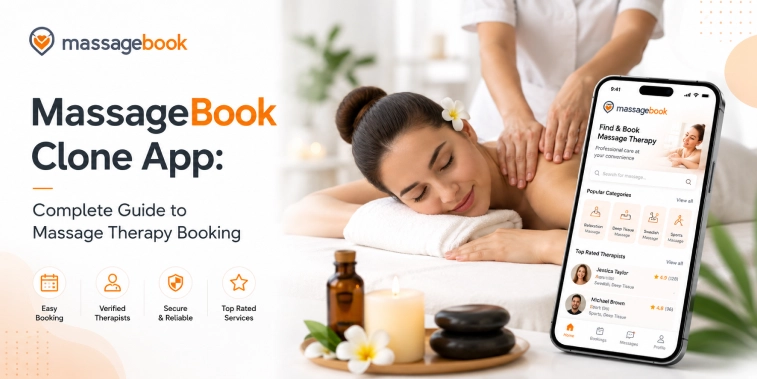
The wellness and massage therapy industry is increasingly adopting digital booking solutions that make it easier for clients to discover therapists, schedule appointments, manage bookings, and receive reminders.
A MassageBook Clone App can provide a customizable foundation for businesses that want to launch their own massage therapy booking platform. Instead of relying on phone calls, manual calendars, or disconnected communication channels, therapists and clients can manage appointments through a centralized digital system.
A modern massage booking platform can connect clients, massage therapists, wellness businesses, and administrators through dedicated interfaces. It can support therapist profiles, service listings, appointment scheduling, availability management, online payments, notifications, reviews, and business analytics.
In 2026, businesses can also explore AI-assisted features such as smarter service discovery, scheduling assistance, personalized recommendations, automated customer support, and business insights.
This guide explains what a MassageBook Clone App is, how it works, its key features, business model, technology requirements, AI opportunities, security considerations, and future potential.
What Is a MassageBook Clone App?
A MassageBook Clone App is a customizable massage therapy booking platform inspired by the functionality of digital massage and wellness appointment systems.
It can help clients:
- Find massage therapists
- Explore massage services
- View therapist profiles
- Check availability
- Book appointments
- Make payments
- Receive reminders
- Manage booking history
- Submit reviews
Therapists and massage businesses can use the platform to:
- Create professional profiles
- List services
- Set prices
- Manage availability
- Accept appointments
- Manage clients
- Track bookings
- Monitor revenue
The platform can be customized with a company’s branding, service categories, booking rules, payment methods, notification system, and business model.
The goal is not simply to reproduce another company’s platform. Instead, businesses can use the concept as a foundation for building their own massage therapy booking solution.
How Does a Massage Therapy Booking App Work?
A typical massage booking platform connects clients and service providers through a digital marketplace or appointment management system.
The basic workflow can be:
Client Registration → Therapist Discovery → Service Selection → Availability → Appointment Booking → Payment → Reminder → Appointment → Review
The process can vary depending on whether the platform is designed for individual therapists, massage clinics, spas, wellness centers, or a multi-provider marketplace.
Who Can Use a MassageBook Clone App?
Clients
Clients can use the application to discover massage services and manage appointments.
Massage Therapists
Independent therapists can use the platform to promote their services and manage their schedules.
Massage Clinics
Clinics can manage multiple therapists, services, appointments, and clients.
Spas and Wellness Centers
Spas can use the platform for massage appointments along with other wellness services.
Admin
Administrators can manage the overall platform, providers, customers, bookings, payments, reviews, and reports.
Why Build a Massage Therapy Booking App in 2026?
Growing Demand for Digital Appointments
Consumers increasingly expect service businesses to offer convenient online scheduling.
A digital booking application can allow clients to book appointments without waiting for a phone response.
Better Therapist Discovery
A marketplace can bring multiple massage professionals together, making it easier for customers to compare services, availability, and profiles.
Automated Scheduling
Digital calendars can reduce manual appointment management.
Reduced No-Shows
Automated reminders can help clients remember upcoming appointments.
Business Growth
Massage professionals can use a digital platform to reach new customers and manage repeat bookings.
Convenient Client Experience
Clients can manage appointments from a mobile device instead of depending on phone calls or manual communication.
Core Components of a MassageBook Clone App
A complete platform can contain several major components.
Client App
The client application provides service discovery, therapist profiles, booking, payments, reminders, and appointment management.
Therapist App
Therapists can manage profiles, services, availability, bookings, clients, and earnings.
Business Dashboard
Massage clinics, spas, and wellness centers can manage multiple providers and appointments.
Admin Dashboard
The administrator can manage users, providers, services, transactions, reviews, promotions, and analytics.
Key Features of a MassageBook Clone App
User Registration and Profiles
Clients can create accounts and maintain their personal information.
The profile can include:
- Name
- Contact information
- Preferred location
- Booking history
- Favorite therapists
- Appointment information
- Notification preferences
Therapists can maintain separate professional profiles.
Therapist Profiles
A detailed therapist profile can help clients make informed booking decisions.
The profile can display:
- Therapist name
- Professional introduction
- Massage services
- Experience
- Qualifications or credentials where applicable
- Languages
- Service area
- Availability
- Pricing
- Reviews
Businesses should ensure any professional credentials displayed are verified appropriately.
Massage Service Listings
Therapists can list the services they offer.
Examples may include:
- Swedish massage
- Deep tissue massage
- Sports massage
- Relaxation massage
- Prenatal massage
- Hot stone massage
- Couples massage
The available services should reflect the therapist’s qualifications and applicable local requirements.
Each service can include:
- Service name
- Description
- Duration
- Price
- Location
- Availability
Search and Filters
Clients can search for massage services based on their preferences.
Filters can include:
- Location
- Service type
- Price range
- Availability
- Duration
- Rating
- Therapist preferences
A strong search experience can reduce the time needed to find an appropriate provider.
Availability Management
Therapists need control over their working schedules.
They can define:
- Working days
- Working hours
- Breaks
- Time off
- Vacation periods
- Appointment duration
The system can then display available slots to clients.
This helps reduce double bookings and manual scheduling errors.
Appointment Booking
The appointment booking system is the central feature of the platform.
Clients can:
- Select a therapist
- Choose a service
- Select a date
- Select an available time
- Confirm booking
- Complete payment where required
The therapist receives the booking information and can manage the appointment from the provider interface.
Appointment Management
Both clients and therapists can manage upcoming appointments.
Supported actions can include:
- Confirm
- Reschedule
- Cancel
- View appointment details
- Receive reminders
- View booking history
Cancellation and rescheduling rules can be configured according to each business’s policies.
Calendar Management
A calendar interface can give therapists a visual overview of their schedules.
It can display:
- Today’s appointments
- Upcoming appointments
- Available slots
- Blocked periods
- Cancellations
- Rescheduled appointments
Calendar synchronization can also be considered where supported.
Online Payments
A massage booking platform can integrate payment processing for eligible services.
Payment options may include:
- Credit cards
- Debit cards
- Digital wallets
- Online banking
- Other locally supported payment methods
The platform can provide payment confirmations and transaction records.
Payment rules should clearly explain deposits, cancellation fees, refunds, and other applicable charges.
Booking Reminders
Automated reminders can help reduce missed appointments.
Notifications can be sent through:
- Push notifications
- SMS
Reminder timing can be configured according to the business’s requirements.
For example:
Booking Confirmed → Reminder → Appointment
Reviews and Ratings
After an appointment, clients can be invited to provide feedback.
Reviews can help:
- Build trust
- Highlight service quality
- Improve provider discovery
- Give therapists feedback
Businesses should implement moderation and reporting mechanisms to manage inappropriate or misleading content.
Favorite Therapists
Clients can save preferred therapists for future bookings.
This feature can encourage repeat appointments and make the booking process faster.
Client Management for Therapists
Therapists and businesses can maintain appropriate client information related to their appointments.
The dashboard can show:
- Client profiles
- Appointment history
- Upcoming appointments
- Booking preferences
- Communication records where appropriate
Any sensitive personal information should be handled according to applicable privacy requirements.
Business Dashboard
Massage clinics, spas, and wellness centers may need a more advanced management interface.
A business dashboard can provide:
- Therapist management
- Service management
- Appointment management
- Schedule management
- Client management
- Revenue information
- Reports
- Promotions
This makes the platform useful for businesses with multiple therapists.
AI Features for a Massage Therapy Booking Platform
AI can make a booking platform more convenient when used for practical tasks.
AI-Powered Service Discovery
AI-assisted search can help users find relevant massage services based on their selected preferences.
For example, instead of searching only by exact service names, users could describe what type of appointment they are looking for, and the system could surface relevant platform categories.
The system should avoid making medical diagnoses or unsupported therapeutic claims.
AI Booking Assistant
An AI assistant can help clients navigate the booking process.
It can assist with questions about:
- Available services
- Appointment times
- Booking procedures
- Cancellation policies
- Platform features
Questions requiring professional health or medical advice should be directed to an appropriately qualified professional.
Smart Schedule Recommendations
AI can help therapists analyze their configured availability and identify scheduling patterns.
For example, the platform could highlight periods with high booking demand or suggest ways to organize available appointment slots.
Personalized Recommendations
The platform can recommend relevant services or therapists based on user-selected preferences and previous booking behavior.
Recommendations should be transparent and avoid inappropriate health claims.
Notifications and Communication
Communication tools can keep clients and therapists informed.
The platform can support:
- Booking confirmations
- Appointment reminders
- Cancellation notifications
- Rescheduling updates
- Promotional notifications
- Platform messages
Businesses should give users appropriate control over marketing communications.
Location and Map Integration
If the platform supports in-person services, maps can help clients locate massage businesses or therapists.
Location functionality can support:
- Nearby therapist discovery
- Distance information
- Directions
- Service-area management
- Address selection
For mobile massage services, location functionality can also help businesses manage service areas.
Mobile and In-Home Massage Services
A customized platform can support different service models.
In-Clinic Booking
Clients visit the therapist’s clinic, spa, or wellness center.
In-Home Booking
Qualified therapists can provide services at a customer’s selected location where permitted.
Hybrid Model
The platform can allow therapists to offer both clinic-based and mobile services.
Each model requires different scheduling, location, pricing, and operational workflows.
Business Models for a Massage Booking App
A massage therapy booking platform can generate revenue through several approaches.
Commission Model
The platform can charge providers a percentage of eligible bookings.
Subscription Model
Therapists or businesses can pay a monthly or annual subscription to access premium tools.
Listing Fees
Providers can pay for enhanced marketplace listings.
Featured Placement
Businesses can pay for promotional visibility where appropriate.
Booking Fees
A platform can apply a service or booking fee according to its pricing strategy and local requirements.
Premium Business Tools
Advanced features such as analytics, staff management, marketing tools, or enhanced scheduling can be included in paid plans.
The best monetization strategy depends on the target market and provider economics.
Technology and Third-Party Integrations
A scalable massage booking application may require several technical integrations.
Payment Integration
Payment gateways can process eligible transactions.
Maps Integration
Location services can support therapist discovery and directions.
Calendar Integration
Calendar integrations can help synchronize appointments where supported.
Communication Services
SMS, email, and push notification services can deliver booking updates.
Video Consultation
If a business offers appropriate remote wellness consultations or related services, video functionality may be integrated according to the service’s legal and professional requirements.
Analytics
Analytics tools can help businesses understand:
- Booking volume
- Customer activity
- Provider performance
- Revenue
- Cancellation patterns
Third-party services should be selected based on security, reliability, cost, scalability, and privacy requirements.
Security and Privacy
A massage booking platform may store personal information, appointment details, payment information, and provider information.
Security measures can include:
- Secure authentication
- Role-based access
- Encryption
- Secure payment processing
- Access controls
- Data backups
- Account protection
- Appropriate data retention
Businesses should comply with applicable privacy and data-protection laws.
If the platform stores sensitive health-related information, additional requirements may apply depending on the jurisdiction and service model.
How to Choose the Right MassageBook Clone App Solution
Businesses should evaluate the platform carefully before launching.
Customization
The application should support custom branding, services, booking rules, and workflows.
Booking Functionality
The scheduling system should support provider availability, appointment durations, cancellations, and rescheduling.
Provider Management
Therapists and businesses should have appropriate tools for profiles, services, schedules, and clients.
AI Features
AI should provide practical assistance rather than unnecessary complexity.
Scalability
The platform should be capable of supporting additional customers, therapists, locations, and bookings.
Integrations
Check whether the platform supports required payment, map, calendar, communication, and analytics integrations.
Security
Review authentication, data protection, access controls, and payment security.
Future of Massage Therapy Booking Apps in 2026
The massage and wellness booking experience can continue becoming more digital.
Future platforms may focus on:
- AI-assisted booking
- Personalized service discovery
- Smarter scheduling
- Automated reminders
- Better business analytics
- Mobile service management
- Digital loyalty programs
- Calendar synchronization
- More flexible subscription models
AI can help automate administrative tasks, but the human relationship between clients and qualified massage professionals remains central to the service.
A successful platform should therefore use technology to improve discovery, booking, communication, and business management without making unsupported health or therapeutic claims.
Conclusion
A MassageBook Clone App can help businesses create a modern digital platform for massage therapy booking and appointment management.
Instead of relying on manual scheduling, phone calls, or separate systems, clients and massage professionals can manage their interactions through one centralized platform.
Core functionality can include therapist profiles, massage service listings, search, availability management, appointment booking, calendar management, payments, reminders, reviews, client management, and business analytics.
AI can further improve the experience through smart service discovery, booking assistance, schedule recommendations, personalized suggestions, and operational insights.
At the same time, a successful massage booking platform should prioritize user privacy, secure payments, professional verification, transparent policies, and an easy-to-use interface.
For entrepreneurs, the opportunity is not simply to copy an existing booking application. The stronger approach is to build a customized platform around a specific audience, service model, geographic market, and business strategy.
With the right combination of booking technology, provider management, customer experience, responsible AI, security, and scalable infrastructure, a MassageBook Clone App can become a practical digital solution for modern massage therapy businesses.
Frequently Asked Questions (FAQs)
1. What is a MassageBook Clone App?
A MassageBook Clone App is a customizable massage therapy booking platform that can connect clients with massage therapists and businesses while providing appointment scheduling, service management, payments, reminders, and other booking features.
2. What are the main features of a massage booking app?
Core features can include therapist profiles, service listings, search, availability management, appointment booking, calendars, payments, reminders, reviews, client management, notifications, and analytics.
3. Can AI be integrated into a MassageBook Clone App?
Yes. AI can support service discovery, booking assistance, schedule recommendations, personalization, customer support, and business analytics. AI should not be used to make unsupported medical diagnoses or replace qualified professionals.
4. Can a massage booking app support in-home services?
Yes. A customized platform can support mobile or in-home massage services by adding location management, service areas, travel rules, scheduling, and appropriate pricing functionality.
5. How can a MassageBook Clone App generate revenue?
Potential revenue models include provider commissions, subscriptions, booking fees, listing fees, featured placements, and premium business tools. The appropriate model depends on the platform’s target market and business strategy.

Parth Kulkarni
Managing Director
Parth Kulkarni is the Managing Director with strong expertise in IT and on-demand app solutions, focused on empowering startups and enterprises with scalable digital products. His strategic leadership and business insight drive innovation, ensuring consistent client success and long-term growth.
